Automation is not automatically safe. A feeder bolted onto a press with weak guarding just moves the hazard around. It helps when controls, safeguards, monitoring, and procedures work together to keep people out of danger zones and make machine responses consistent.
This article covers how automation improves safety in practice, where it matters most in metal stamping and forming, and what it takes to implement it responsibly.
Key Takeaways
- Automation cuts worker exposure to points of operation, repetitive handling, and manual troubleshooting.
- Fail-safe controls can stop a press when guards or required conditions aren't satisfied.
- Sensors, diagnostics, and alarms flag abnormal conditions sooner.
- Safe automation needs risk assessment, validation, training, maintenance, and OSHA/ANSI compliance.
- It complements guarding, lockout/tagout, and PPE. It never replaces them.
What Is Automation in Industrial Safety?
Industrial safety automation means using controls, sensors, software, monitoring, and automated equipment to prevent hazardous operation and detect unsafe conditions. It also reduces the need for people to handle dangerous tasks by hand.
Common applications include:
- Mechanical punch presses and stamping lines
- Automatic feeding and ejection
- Light curtains, safety mats, and interlocked guards
- Brake monitors and die protection
- Production and fault monitoring
Automation is a means to a safety outcome. The system should keep people out of danger zones, put equipment in a safe state when conditions change, and give operators clear information. Human oversight stays in the loop.
Key Advantages of Automation for Safety
The most meaningful benefits are operational: less hazardous exposure, more predictable machine behavior, faster fault response, and better evidence for maintenance and safety decisions. Track them with measures such as intervention frequency, near misses, fault response time, downtime, and audit findings.
Reducing Direct Exposure to Hazardous Tasks
Consider a stamping line where an operator hand-feeds blanks and pulls parts out of the die. Every cycle puts hands near the point of operation. OSHA's amputation guidance notes that automatic or semi-automatic feeding and ejection can minimize or eliminate exposure to hazardous machine components.
Fewer manual touches mean less exposure to crush, pinch, struck-by, and repetitive-motion hazards. NIOSH's 2007 material-handling guidance likewise supports lift assists and similar interventions to reduce physical demands.
Caveats matter. OSHA's 1910.212 still requires guarding that prevents body entry into the danger zone during the operating cycle. Automated equipment creates its own hazards and needs controlled access.
KPIs to watch:
- Manual touches per cycle
- Time spent in hazard zones
- Intervention frequency
- Ergonomic complaints and near misses
This matters most on high-cycle stamping, heavy-part handling, and labor-constrained lines. The historical stakes are stark: a NIOSH review of 1975-1983 OSHA reports found that 49% of mechanical power press injuries involved amputation. That is old data, not a current rate, but it shows why the point of operation gets so much attention.
Enforcing Safer and More Predictable Machine Behavior
Emergency stops, interlocks, light curtains, safety mats, safety relays, brake monitors, and fail-safe logic prevent or interrupt hazardous motion when required conditions aren't met. A properly engineered system won't run with an open guard, stops motion in an emergency, and moves to a defined safe state after a detected fault.

For mechanical power presses, 1910.217 sets specific expectations where they apply:
- Control reliability: a control failure must not prevent normal stopping and must block another stroke until corrected.
- Brake monitoring: must prevent another stroke if stopping time deteriorates beyond the safe distance, and must monitor every stroke.
- Presence sensing: not permitted on full-revolution-clutch presses.
A stamping example shows how this fits together. Press controls, brake monitoring, die protection, and guarding should be evaluated as one safety strategy, not four purchases.
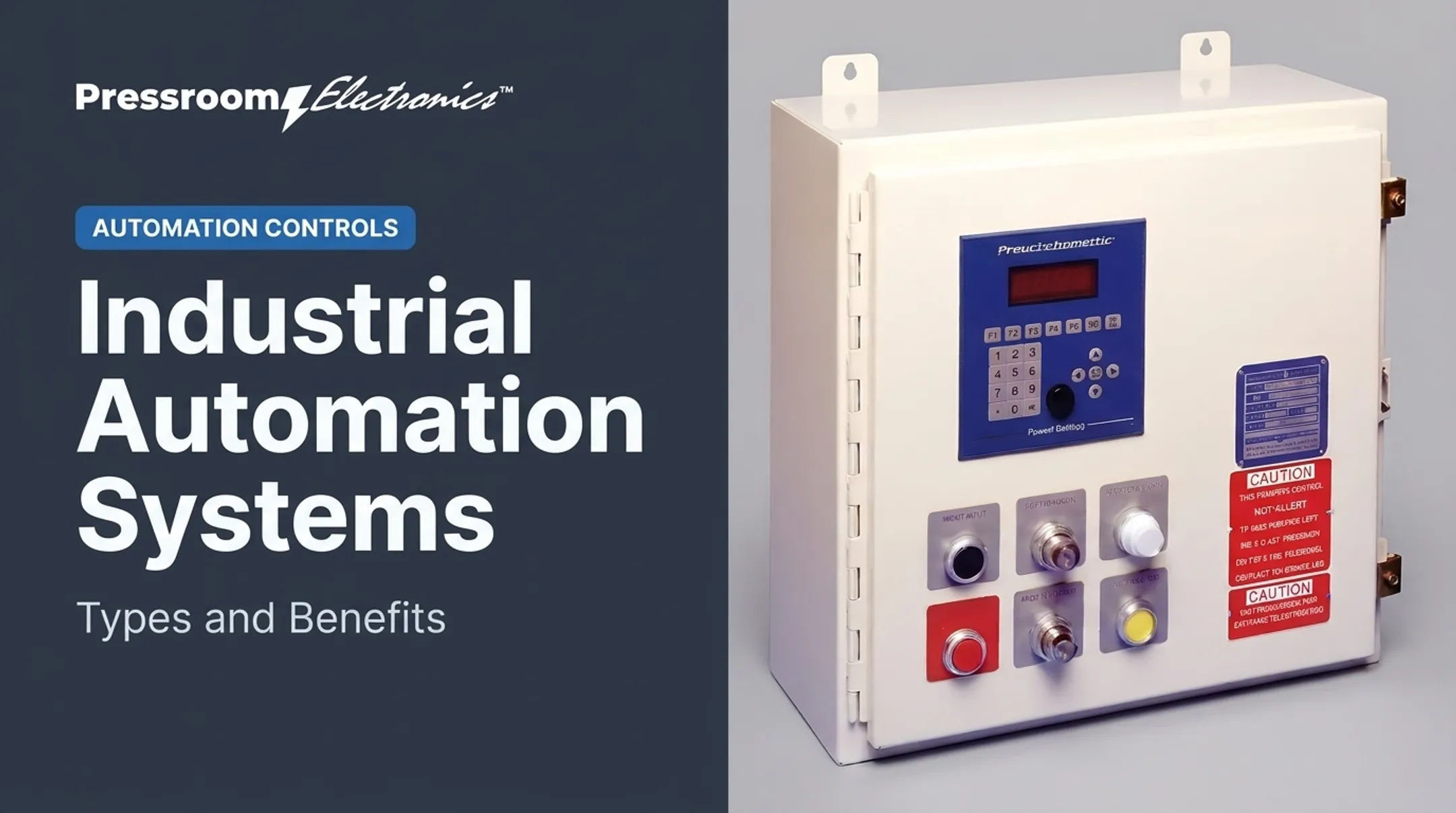
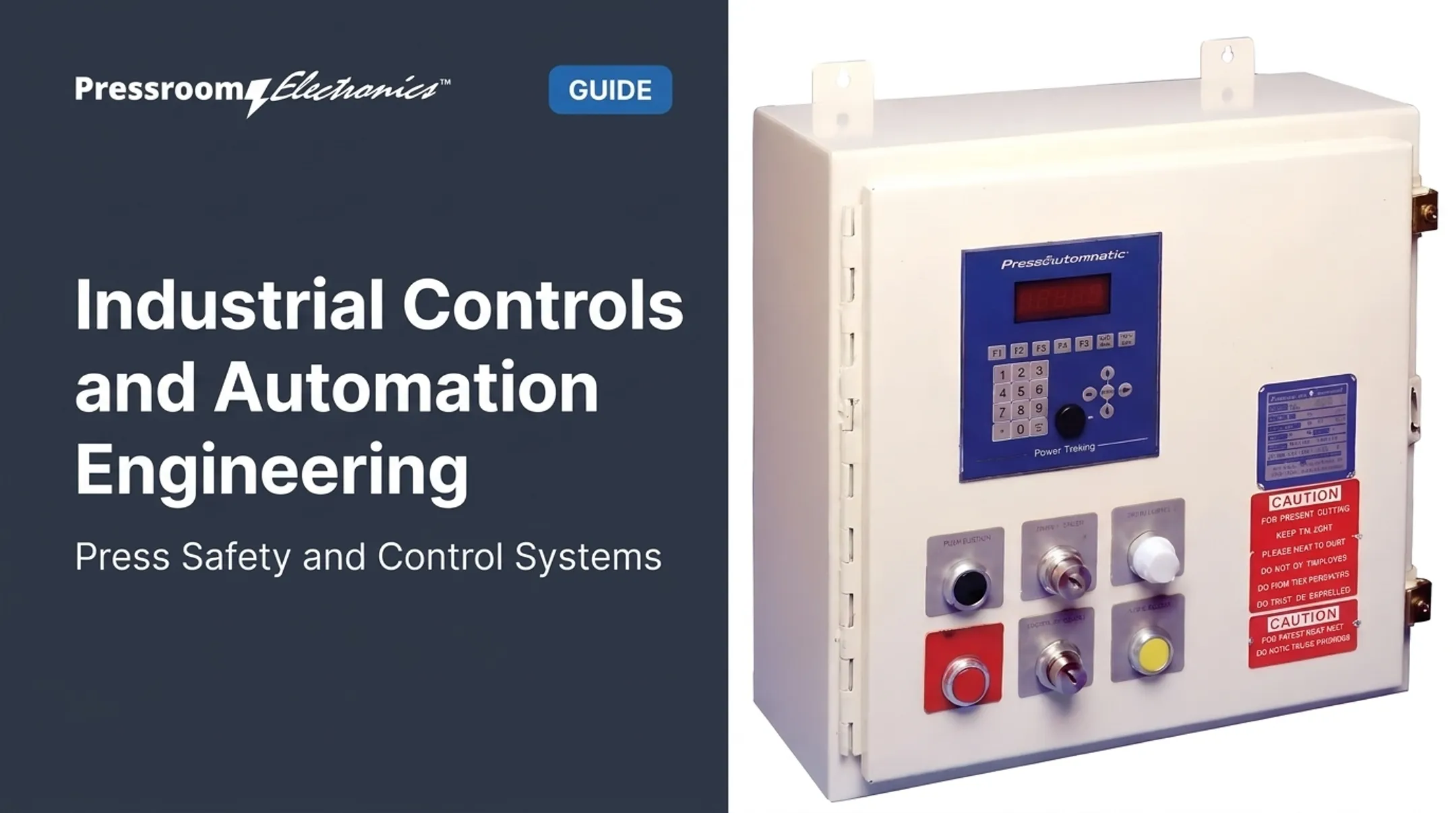
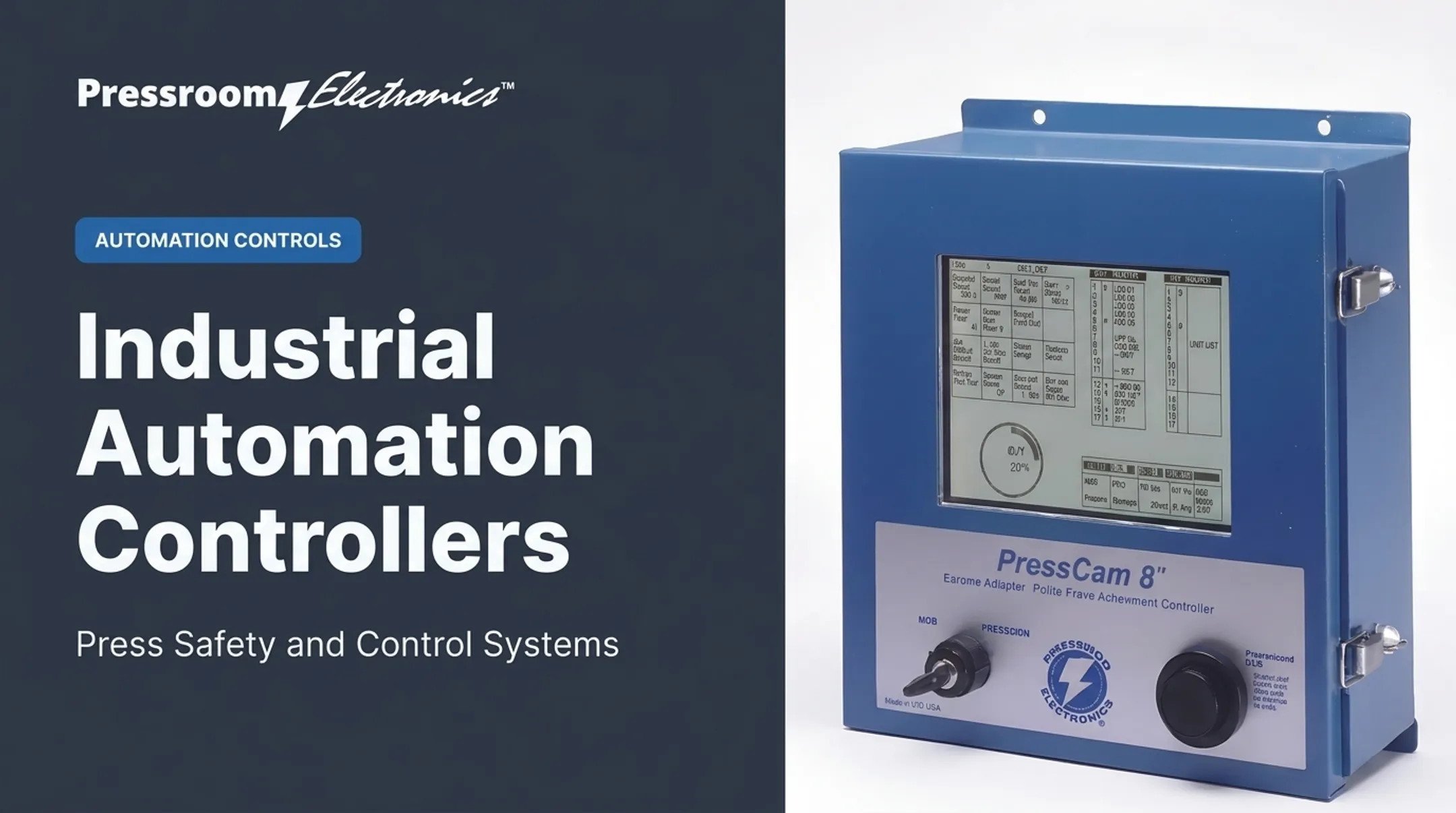
Pressroom Electronics, for instance, makes integrated clutch/brake controls, time-based brake monitors, die protection inputs, light curtains, and safety mats. Its PressCommander routes E-stop, motion, brake-monitor, and sensor faults through two force-guided safety relays.
A product alone doesn't guarantee compliance, though. Installation, integration with other equipment, and maintenance determine the result.
KPIs to watch:
- Safety-device fault frequency
- Guard-interlock test results
- Emergency-stop response verification
- Audit findings and unauthorized bypasses
Engineered safeguards matter most on high-speed presses, machines with multiple access points, and aging equipment being upgraded.
Detecting Faults Earlier and Improving Maintenance Response
A plain stoppage tells a maintenance tech almost nothing. Sensors, diagnostics, alarms, and programmable reason codes tell them what happened. That means less time hunting for causes while reaching into equipment, and fewer minor faults growing into big ones.
A NIST MEP case study shows the idea. Keats Manufacturing added sensing and embedded monitoring to a hydraulic punch press to calculate OEE. NIST reports more accurate OEE data and timely maintenance-planning information. The study reports no injury-reduction figure, so treat this as a maintenance benefit that supports safer troubleshooting.
Monitoring supports safety. It does not replace physical safeguarding or lockout/tagout.
KPIs to watch:
- Fault response time and mean time to repair
- Repeat fault frequency
- Unplanned downtime and maintenance-call volume
- Near-miss trends
The value is greatest on high-volume lines, multi-press operations, and plants with limited experienced maintenance staff.
What Happens When Automation Safety Is Missing or Ignored
Automation without a safety strategy can transfer risk instead of removing it. Poor assessment, badly integrated safeguards, and routine overrides leave people exposed to unexpected motion and inconsistent emergency responses.
Enforcement data backs this up. In OSHA's preliminary 2026 list, lockout/tagout ranks #3 with 1,863 violations and machine guarding #10 with 1,072, per OSHA's Top 10. That list covers all industries.

Real cases show the pattern:
- G&S Metal Products, 2024: two amputations from unsecured pullbacks, inadequate guarding, and no lockout; OSHA proposed $182,293 in penalties.
- NI Illinois, 2025: cited under 1910.217(d)(9)(i) for lacking a die-setting procedure on mechanical presses.
Other failures are quieter. Without diagnostics and maintenance discipline, faults recur, firefighting replaces planning, and root causes stay hard to find after an incident.
Undocumented procedures and thin training make safe operation hard to scale across shifts, temporary staff, and modified equipment.
How to Get the Most Value from Automation for Safety
Automation delivers its strongest results when it is applied consistently, validated before production, reviewed after changes, and supported by trained people.
Start With Risk Assessment and Phased Rollout
- Map hazards first. Cover points of operation, access routes, manual interventions, and maintenance tasks. Include hazards the automation introduces.
- Involve the floor. Operators, maintenance, and EHS staff see risks that drawings miss. Frameworks such as ANSI B11.0 and ISO 12100 give structure.
- Roll out in phases. Define the safe state for each machine and verify that controls, guards, interlocks, E-stops, and lockout/tagout work together before expanding.
Retrofits have their own rules. Under 1910.217(a)(4), those who reconstruct or modify a press are responsible for meeting paragraph (b). Pressroom Electronics offers plant surveys and risk assessment as part of retrofit work.

Design, Validate, and Maintain the Whole System
Use appropriately rated components, clear HMI messages, protected wiring, and documented validation. Then schedule testing against actual requirements:
| Activity | Requirement |
|---|---|
| General press inspection | Periodic and regular, with records (1910.217(e)(1)(i)) |
| Clutch/brake, antirepeat, single-stroke tests | At least weekly, unless the press meets (b)(13)/(b)(14) |
| PSDI device checks | Each shift and every die change |
| PSDI validation | Before use, then at least annually |
| LOTO procedure inspection | At least annually |
Follow manufacturer instructions and site procedures too. Add checks after modifications, faults, or incidents.
Train People and Measure Performance
Train operators and maintenance staff on normal operation, alarms, bypass restrictions, emergency response, and lockout/tagout. PSDI systems require training before initial operation and at least annually.
Then use the data. OSHA's leading-indicator guidance points to measures like inspections completed, hazard-abatement timing, and near-miss reporting. Review safety-device faults, intervention frequency, and downtime trends so the system improves after it is installed.
Conclusion
Automation improves safety when it reduces hazardous exposure, enforces predictable machine behavior, and surfaces abnormal conditions early. Those gains depend on risk assessment, sound equipment design, training, maintenance, and daily discipline.
Treat it as an ongoing safety practice, not a one-time purchase. That is especially true for manufacturers upgrading existing stamping and forming presses, where integration and validation decide whether the new equipment is actually safer.
Frequently Asked Questions
What are the key automation safety rules?
Start with risk assessment, then apply machine guarding, fail-safe controls, E-stops, lockout/tagout, training, and preventive maintenance. Comply with applicable OSHA (such as 1910.212, 1910.217, 1910.147) and ANSI requirements.
How does automation improve workplace safety?
It reduces manual exposure, enforces safety conditions, stops equipment when faults occur, and improves visibility into machine status. Human oversight is still required.
What safety devices are used in industrial automation?
Common devices include E-stops, interlocks, light curtains, safety mats, safety relays, safety controllers, brake monitors, guards, and diagnostic sensors. Selection depends on the application's risk assessment.
Can automation replace operator training or PPE?
No. NIOSH's hierarchy of controls ranks engineering controls above administrative controls and PPE, but training, PPE, guarding, and lockout/tagout all remain necessary.
How can manufacturers safely automate an existing punch press?
Assess the equipment and hazards, then evaluate clutch/brake controls, brake monitoring, die protection, and guarding as one validated safety circuit. Involve operators and document testing before returning the press to production.
How often should automated safety systems be tested and maintained?
Follow applicable regulations, risk assessment findings, manufacturer instructions, and site procedures. Test again after modifications, faults, or incidents.