The stakes are real. Siemens' True Cost of Downtime report puts unplanned downtime at $129M per year for a typical plant run by a Fortune Global 500 firm. That's large-company context, not a panel-specific loss, but it shows why small build errors matter.
This guide covers panel components, the assembly process, quality and US compliance, and what industrial and metal stamping applications require.
Key Takeaways
- Assembly means mounting, wiring, labeling, inspecting, and testing components in an enclosure.
- Current drawings, specifications, and revision control are the foundation of a reliable build.
- Routing, labels, grounding, safety circuits, and functional tests determine serviceability.
- Pressroom equipment may need clutch/brake controls, monitoring, guarding, and custom programming.
What Is Electrical Control Panel Assembly?
What an electrical control panel assembly does
The panel takes in electrical power, distributes control voltage, receives machine signals, and sends commands to motors, actuators, and other equipment. It sits between the power source, automation logic, operator controls, safety devices, and field equipment.
UL, quoting NEC 409.2, defines an industrial control panel as an assembly of two or more power-circuit components, control-circuit components, or a combination of both.
Where electrical control panel assemblies are used
- Industrial machinery and automation cells
- Material handling systems
- OEM equipment
- Mechanical punch presses and metal forming lines
Enclosure, components, wiring, and programming all shift with machine function, environment, voltage, safety requirements, and monitoring needs.
Assembly versus design, installation, and commissioning
Physical assembly is not the same as electrical design, component selection, machine installation, field wiring, programming, or commissioning. A supplier's quote may cover only some of these.
Before requesting quotes, decide what you need:
- A bare enclosure
- A wired panel
- A programmed control system
- A fully integrated machine solution
What Components Make Up an Electrical Control Panel Assembly?
Enclosure and internal mounting hardware
Typical hardware includes:
- Enclosure and back panel
- DIN rails and wiring ducts
- Ventilation or cooling equipment
- Grounding hardware and door-mounted accessories
Size, environment, accessibility, spacing, and heat dissipation drive the layout.
Choose enclosure ratings only after the environment and requirements are known. Manufacturer summaries describe Type 12 as indoor protection against circulating dust, lint, and dripping liquids, and Type 4X as Type 4 washdown protection plus corrosion resistance. IP ratings come from IEC 60529, and NEMA cautions that the two systems use different tests and aren't exact equivalents.
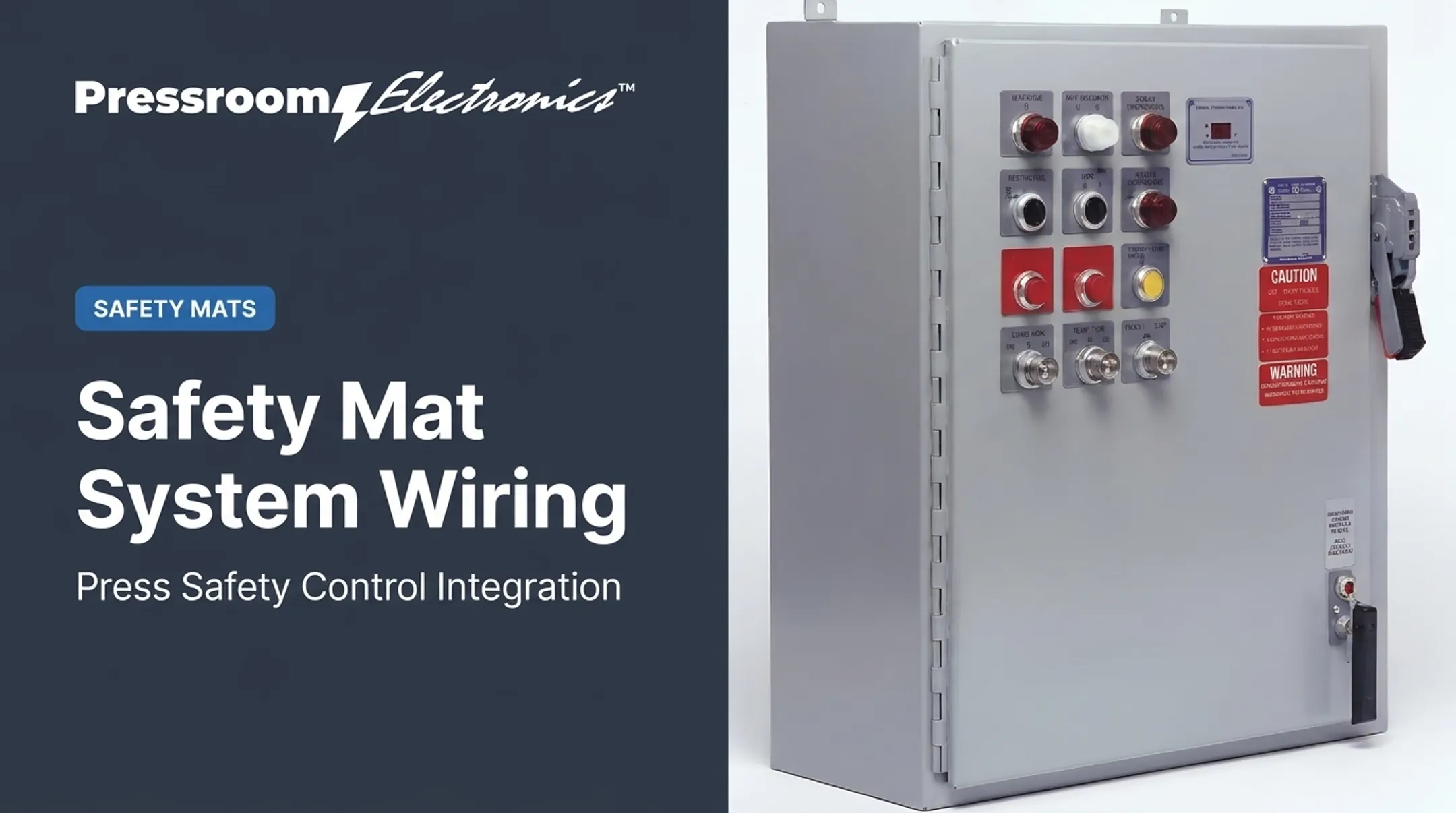
Pressroom Electronics' Model 3200SS, for example, uses a NEMA 12 enclosure.
Incoming power and protection components
The power section may include:
- Disconnects and main circuit breakers
- Fuses and surge protection
- Transformers and DC power supplies
- Overload protection
- Terminal blocks
Ratings must match the incoming supply, connected loads, fault conditions, and design documents. Pressroom's PCS-2000, for instance, steps 480/240 VAC down to a 120 VAC secondary, and 208- or 550-volt systems need factory consultation.
Control and logic components
Control devices turn sensor inputs and programmed logic into commands for motors, clutches, brakes, valves, and actuators. Common components include:
- PLCs and I/O modules
- Relays, contactors, and motor starters
- Variable-frequency drives (VFDs)
- Safety relays
A VFD, per ABB, sits between supply and motor and regulates speed by changing frequency and voltage.
Know the limits, too. Safe torque off does not provide electrical isolation, so it doesn't replace a disconnect.
Operator, safety, and communication interfaces
Interfaces typically include:
- HMIs, push buttons, and selector switches
- Emergency-stop devices
- Indicator and stack lights
- Network switches and external safety interfaces
These give operators visibility and a safe way to stop. A safety relay opens its contacts and de-energizes contactors on an e-stop. Resetting the e-stop must not restart motion; a separate start action is required.
Wiring, terminals, labels, and grounding
Use conductors, wire markers, terminal blocks, cable entry hardware, and grounding conductors to keep power and control wiring separated, routed consistently, and terminated securely. Labels should let a technician trace any circuit against the drawings.
Wire colors, labels, and termination methods must follow approved drawings, customer specifications, and applicable standards. Don't assume a universal color chart.
Pressroom's installation guidance shows the detail involved. Remote switches use shielded cable kept away from high-current wiring, and a separate earth-ground conductor goes to the "G" terminal.

How Is an Electrical Control Panel Assembled?
Review the technical documentation before production
Start with current documentation:
- Schematics and panel layouts
- Bills of materials and wire lists
- I/O schedules and component specifications
- Approved revision levels
Missing or outdated documents lead to wrong components, misplaced devices, wiring discrepancies, and field rework.
Before technicians start, confirm substitutions, open engineering questions, and testing expectations.
Prepare the enclosure and install components
Prepare the enclosure, mounting plate, DIN rails, ducts, grounding points, cable entries, and door devices per the approved layout. Placement affects heat, wire length, access, serviceability, and future expansion.
Small details matter. Pressroom's PressCam 8 instructions note that a door-mounted controller needs clearance so the LCD isn't hit when the door opens. Enclosures on vibrating presses must be shock-mounted.
Route, terminate, and identify the wiring
Route conductors through ducts, land them on the specified terminals, keep separation and bend requirements, and secure every termination. Consistent identification and neat routing speed up continuity checks, troubleshooting, and repeat builds.
Safety: Live electrical work belongs to qualified personnel using proper de-energization and lockout/tagout procedures. Under OSHA 1910.147, pushbuttons and selector switches are not energy-isolating devices.
Verify components and connections
Verification includes:
- Visual inspection and component-versus-BOM checks
- Point-to-point continuity
- Terminal and grounding checks
- Review against the drawings
Processing magazine's guidance describes point-to-point checks followed by progressive power-up and basic I/O checks.
Catching a swapped wire on the bench costs minutes. Catching it during machine startup costs a day.
Complete functional checks and release documentation
Testing may cover power-up, I/O verification, safety circuits, PLC/HMI communication, and a customer factory acceptance test (FAT) when in scope. Release documents may include:
- As-built drawings
- Test results
- Component lists
- Labeling records
- Approved change notes
- Maintenance information
Agree on the exact test scope before production and document it for the customer.

How Do Design, Safety, Testing, and Compliance Affect Quality?
Design for electrical performance and maintainability
Confirm load requirements, control voltage, space, heat generation, clearances, wire capacity, and inspection access. Leave practical room for service and documented future changes. An overcrowded panel is a maintenance problem waiting to happen.
Heat management depends on the application:
- Ventilation with fans pulls in ambient air and can't cool below ambient; filters need upkeep
- Air-to-air exchangers and air conditioners keep the enclosure sealed from outside air
- Only air conditioning can cool below ambient
- Airflow should pass unobstructed past components, with fan inlets low and outlets high, per Rittal
Address machine safety and applicable US requirements
Build in these safety elements from the start:
- Emergency stops and disconnects
- Overload protection and grounding
- Guarding interfaces and interlocks
- Warning labels and safe access Several US documents may apply:
| Instrument | Scope |
|---|---|
| NEC (NFPA 70, 2026 edition) | Electrical design, installation, inspection |
| NFPA 79 (2024) | Electrical equipment of industrial machinery |
| UL 508A | Industrial control panels |
| OSHA 1910.217 | Mechanical power presses |
| OSHA 1910.212 | General machine guarding |
| NFPA 70E | Electrical safety in the workplace |
Applicability depends on the panel, machine, installation, customer, and jurisdiction. The latest published NEC edition isn't necessarily the one your jurisdiction has adopted. A UL 508A label covers the panel, not external loads or the whole machine, and not every panel needs the same designation.
For mechanical presses, OSHA 1910.217 adds specifics:
- A main disconnect must lock only in the OFF position
- Clutch/brake control circuits must be protected against accidental grounds
- Where required, control failures must not allow a successive stroke
- Brake monitors must flag deterioration of stopping performance
Press brakes are excluded from 1910.217 and fall under ANSI B11.3.
Test before integration or shipment
A documented factory test covers visual inspection, point-to-point continuity, insulation or grounding checks where specified, power-up, I/O testing, and safety-function testing. It reduces startup surprises and creates a baseline for later troubleshooting.
Safety note: Energized testing requires qualified personnel, appropriate PPE, controlled access, and approved procedures, per NFPA 70E.

Factory acceptance testing (FAT) supports acceptance but doesn't replace construction, installation, or machinery-safety requirements.
Preserve documentation and revision control
As-built schematics, BOMs, wire lists, test records, manuals, and revision histories matter for installation, repair, and later modifications. Set a clear process for engineering changes, approved substitutions, drawing revisions, and customer signoff.
Support repeatability, diagnostics, and production visibility
Standard layouts, repeatable wiring, consistent labels, and inspection checklists keep multiple panels consistent. On connected equipment, verify PLC, HMI, network, monitoring, and diagnostic signals too. The panel is more than a power cabinet.
Diagnostics pay off in practice. At Waukesha Tool & Stamping, MetalForming reported that press-connected monitoring with reason codes exposed idle time. The shop changed operator responsibilities and added roving operators on selected shifts, and uptime improved.
How Should US Manufacturers Specify an Assembly Partner?
Provide a complete project information package
Prepare:
- Application description and electrical drawings
- Layout and BOM
- Incoming power and load requirements
- I/O list and environmental conditions
- Enclosure needs and safety functions
- Production quantity and required documentation
Say whether the panel supports a new machine, a rebuild, a retrofit, or a replacement for an aging control system.
Evaluate process control and technical capability
Confirm how the supplier handles:
- Revisions, component availability, and approved substitutions
- Inspection, testing, and as-built documents
- Repeat orders and engineering questions
Review experience with your machinery type, safety functions, control platforms, field upgrades, programming, and post-delivery support. Price alone is a poor comparison.
Keep qualifications separate. UL panel shop participation, panel construction, press-specific controls, and integration documentation cover different subjects.
Match the assembly to the pressroom application
Mechanical punch presses and forming equipment may need:
- Coordinated clutch/brake controls
- Brake monitoring and die protection
- Guarding, machine logic, and production monitoring
MetalForming's 2025 discussion covers clutch/brake control through a safety-rated dual air valve.
Pressroom Electronics designs and manufactures press controls in the USA for metal stamping and forming. Offerings include:
- Resolver- and rotary-cam-based clutch/brake controls
- Panel-mounted assemblies
- Brake monitoring, die protection, and guarding
- Production monitoring
Factory-created custom programs arrive as encrypted files through an onboard USB port.
To discuss application requirements, customized programming, and control solutions, contact Pressroom Electronics at sales@pressroomelectronics.com or 800-937-4334.
Frequently Asked Questions
What is a control panel assembly used for?
It houses and connects power, control, safety, and monitoring components to operate industrial machinery. It links the power source, PLC or relay logic, operator controls, and field equipment.
What are the components of a control panel assembly?
Common parts include the enclosure, disconnect, circuit protection, power supply, terminal blocks, PLC, relays, wiring, HMI, and safety devices. The exact configuration varies by application.
What does a control panel assembly look like?
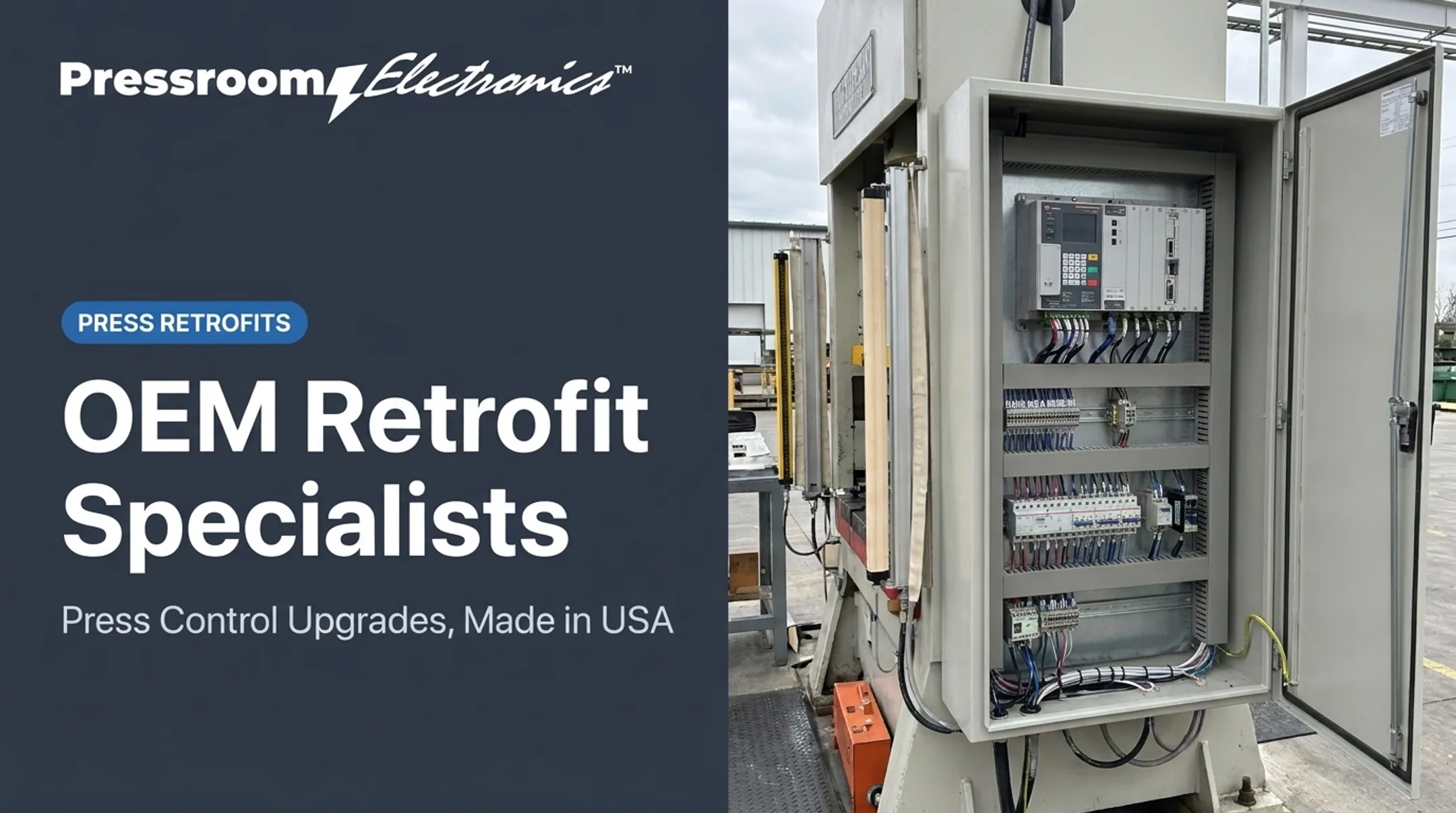
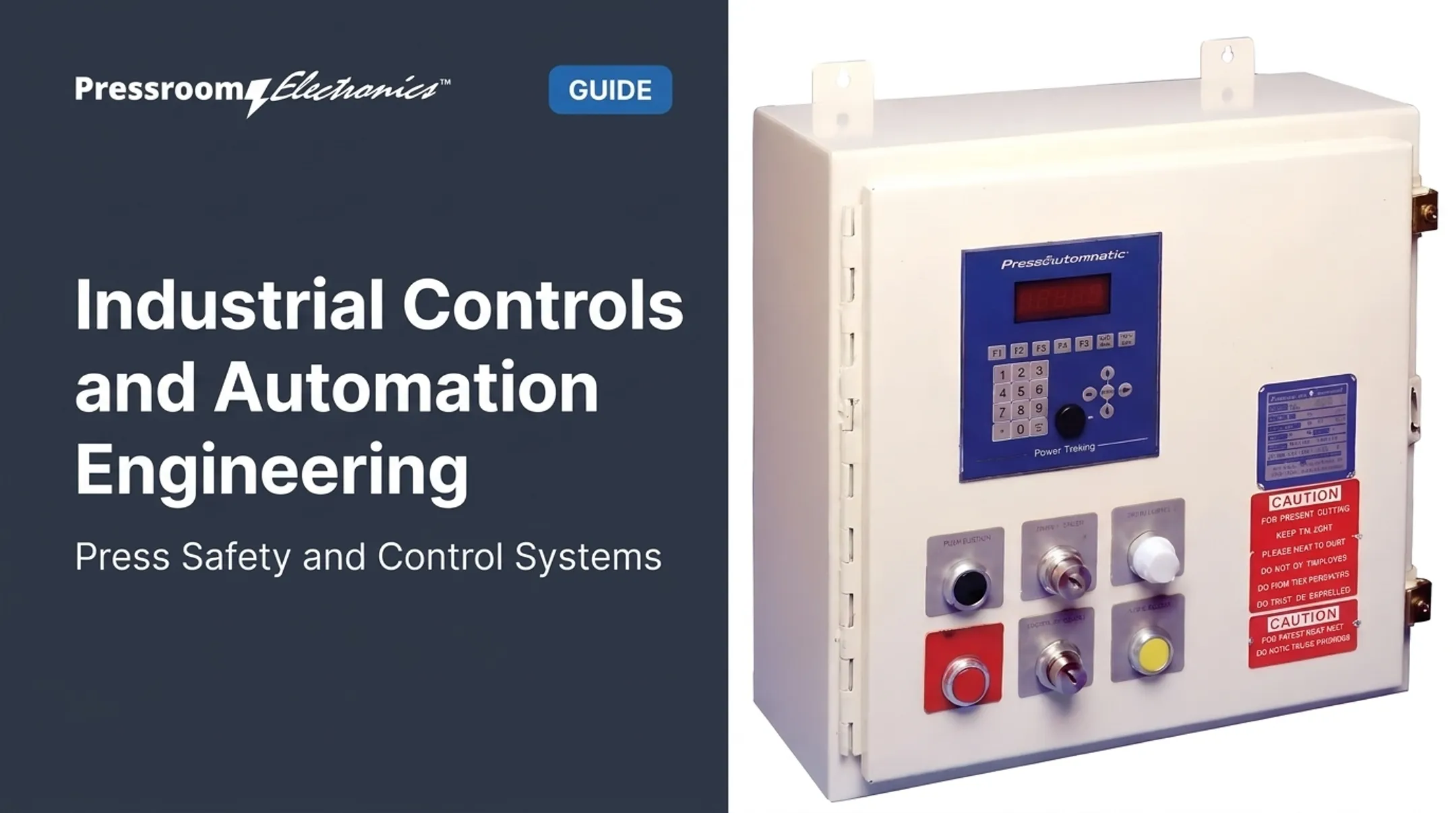
A metal enclosure holds an internal mounting plate with rails and wiring ducts and labeled conductors. The door may carry switches, indicators, or an HMI.
How is an electrical control panel tested before installation?
Typical steps are visual inspection, drawing-to-panel verification, continuity checks, grounding and safety checks, and functional or I/O testing. The scope should be agreed in the project.
What standards apply to electrical control panel assembly in the US?
It depends on the machine, installation, customer, and jurisdiction. Possibilities include the NEC, NFPA 79, OSHA requirements, UL 508A, and local review.