That difference matters in industrial automation, pneumatic circuits, fluid control, and mechanical press work. The wrong valve can cause incomplete actuation, unreliable startup, and early maintenance. Downtime is expensive: a Siemens 2024 report puts an idle production line at a heavy-industry plant at $59M annually. That figure is not a stamping-press or valve-failure benchmark, but it shows what is at stake.
This guide compares how each valve works, pressure requirements, flow, power, maintenance, and fit for press applications.
Key Takeaways
- Direct-acting valves use the coil to move the sealing element, suiting low, zero, or fluctuating pressure.
- Pilot-operated valves use process pressure to move a larger seal, suiting high flow with dependable pressure.
- Check minimum differential pressure before port size, voltage, or price.
- Match valve type, flow, media, fail state, and duty cycle to the real machine cycle.
Direct-Acting vs. Pilot-Operated Solenoid Valves: Quick Comparison and Selection Criteria
Comparison at a glance
| Factor | Direct-acting | Pilot-operated |
|---|---|---|
| Operating principle | Coil moves the main plunger or seal | Coil opens a pilot passage; pressure moves the diaphragm or piston |
| Minimum pressure | Typically operates from 0 psi to rated maximum | Internal-pilot floating designs need a minimum differential |
| Flow | Limited by orifice size and coil force | Larger flow paths when pressure is available |
| Complexity | Simple mechanism | Pilot passages, diaphragm or piston |
| Maintenance exposure | Fewer internal parts | Pilot bores and diaphragm sensitive to contamination |
| Best fit | Low pressure, vacuum, startup, fluctuating supply | Stable supply, larger ports |
Terminology is slippery. Some "servo-assisted" or "semi-direct" valves couple the armature to the diaphragm mechanically, so they can open without differential. Read the exact datasheet.
Pressure and differential pressure
Inlet pressure is not differential pressure. Differential is inlet minus outlet. A gauge reading 80 psi at the inlet means little if the outlet is also near 80 psi.
Several conditions can erase the differential a pilot-operated valve needs:
- Startup, before supply pressure builds
- Low tank level in gravity or tank-fed lines
- Downstream backpressure
- Pressure fluctuations during the cycle
- A blocked outlet
Published examples show the stakes. The Burkert 6281 datasheet lists a 3-232 psi range but requires 7.5 psi differential for full opening.
Flow, port size, and energy
Direct-acting valves usually trade flow for simplicity. Opening force rises with orifice size and pressure, so larger orifices demand more magnetic force. In matched Burkert 6013 listings (24 V DC, 8 W, 1/8 NPT), Cv of 0.14 goes with 0-174 psi, while Cv 0.27 goes with 0-87 psi.
Pilot-operated designs reach bigger flow paths. The 6281 in 1/2 NPT lists Cv 4.4.
Energy claims need care. One 6281 configuration lists 0.6 W holding power, but that cannot be generalized to every pilot valve. Compare datasheets.

Total cost and maintenance
Purchase price is one line item. Also weigh:
- Coil size and power draw
- Pilot-orifice cleanliness and filtration (the 6213/6281 instructions call for a dirt trap of 500 microns or finer)
- Diaphragm or piston wear
- Replacement access
- Cost of a wrong selection causing downtime
Parker's S5/25/H5 instructions call for internal inspection at least every 12 months or 500,000 cycles, whichever comes first. That is an inspection interval, not a life rating.
Selection checklist for an industrial machine
Verify these before ordering:
- Minimum and maximum pressure
- Differential pressure throughout the cycle
- Required flow or Cv/Kv
- Media compatibility and temperature
- Voltage and AC/DC configuration
- Normally open or normally closed fail state
- Duty cycle
- Enclosure rating and installation orientation
Then look at the whole system. On a mechanical press retrofit, confirm the valve works with the pneumatic circuit, clutch/brake control, guarding, and monitoring. A solenoid valve is not a substitute for a safety-rated press control.
What Is a Direct-Acting Solenoid Valve?
Definition and operating principle
In a direct-acting valve, the coil moves the plunger or armature that opens and closes the main flow path. Energizing creates a magnetic field and lifts the plunger off the seat. De-energizing lets a spring return it. Normally open versions reverse that function.
Why it works at low or zero pressure
The coil supplies all the opening force, so many direct-acting valves work at zero or low differential. ASCO's engineering guide describes operation from 0 psi to rated maximum. Vacuum is a separate rating. The SMC VX2*4, for example, is offered specifically for medium vacuum.

That suits gravity-fed systems, tank discharge, vacuum circuits, dosing, testing, and functions that must actuate before line pressure stabilizes. Confirm the zero-pressure or vacuum rating for your exact model.
Benefits and tradeoffs
Benefits:
- Simple mechanism
- Operation independent of line pressure
- Predictable actuation
- Compact designs
The tradeoff is force. The coil fights both spring and line pressure, so bigger orifices or higher pressures can need larger coils, more heat, or a different design. Not every direct-acting model is faster or more reliable than every pilot-operated one.
Variations to know
- 2-way and 3-way configurations
- Normally closed and normally open versions
- Semi-direct or servo-assisted designs, which can combine pressure independence with more flow than a basic direct-acting valve
Read limits for the latter from the manufacturer's datasheet.
Manufacturing and pressroom use
Typical uses include:
- Low-pressure pneumatic control and intermittent actuation
- Vacuum or sensing circuits, testing, and dispensing
- Press functions that must move before full pressure is available
On a stamping line where pressure sags or arrives late, a valve that doesn't depend on differential removes one failure mode. Validate that against your own circuit rather than assuming a result.
What Is a Pilot-Operated Solenoid Valve?
Definition and operating principle
A pilot-operated valve uses the coil to control a small pilot orifice. Pressure does the heavy lifting on a larger diaphragm or piston.
In a normally closed internal-pilot valve, a bleed passage lets inlet pressure into the chamber above the diaphragm. Energizing the coil opens the pilot toward the outlet. Pressure above the main seal drops, and inlet pressure lifts it. De-energizing reverses the sequence.
Internal versus external pilot
- Internal pilot: the process medium is the pilot source, and a minimum inlet or differential pressure normally applies.
- External pilot: a separate pilot supply moves the valve, as Norgren describes. You depend less on process-line pressure, but add pilot plumbing and controls.
Labels vary by manufacturer. Burkert uses "servo-assisted" for both the 6281 and the spring-coupled 6213, which behave differently at low pressure. ASCO's hung constructions are mechanically held open at zero drop, while floating ones need differential.
When differential is present, pressure assistance supports larger orifices and pipe sizes without a coil big enough to lift the entire seal. It fits stable compressed-air systems, industrial water and utility lines, and hydraulic circuits where that differential stays available.

Limitations and failure risks
An internal-pilot valve can energize electrically and still not open. Causes include:
- Low pressure or insufficient differential
- Pressure reversal
- Downstream conditions that stop the diaphragm shifting
- Clogged pilot or bleed passages
- Contaminated media or a damaged diaphragm
- Wrong flow direction or pressure spikes
SMC's VXZ instructions also note that a closed valve cannot block reverse flow when outlet pressure exceeds inlet.
In stamping and automation, a pilot-operated valve can suit a press or line with stable pneumatic or hydraulic supply where flow capacity or larger ports matter. Test the choice against real startup, emergency-stop recovery, cycling, and maintenance conditions. A higher-flow valve is not automatically better.
Real-World Examples and Case Study
Published customer case studies that quantify direct-acting versus pilot-operated performance side by side are scarce. A documented manufacturer application note still shows how both types are applied in practice.
Burkert's compressed air application note covers compressor unloading. The challenge: prevent startup against pressure, and vent at stop. Burkert lists both the direct-acting 6013 and the servo-assisted diaphragm 6281 among the options. It reports reduced energy consumption and longer service life qualitatively, without measured conversion figures.
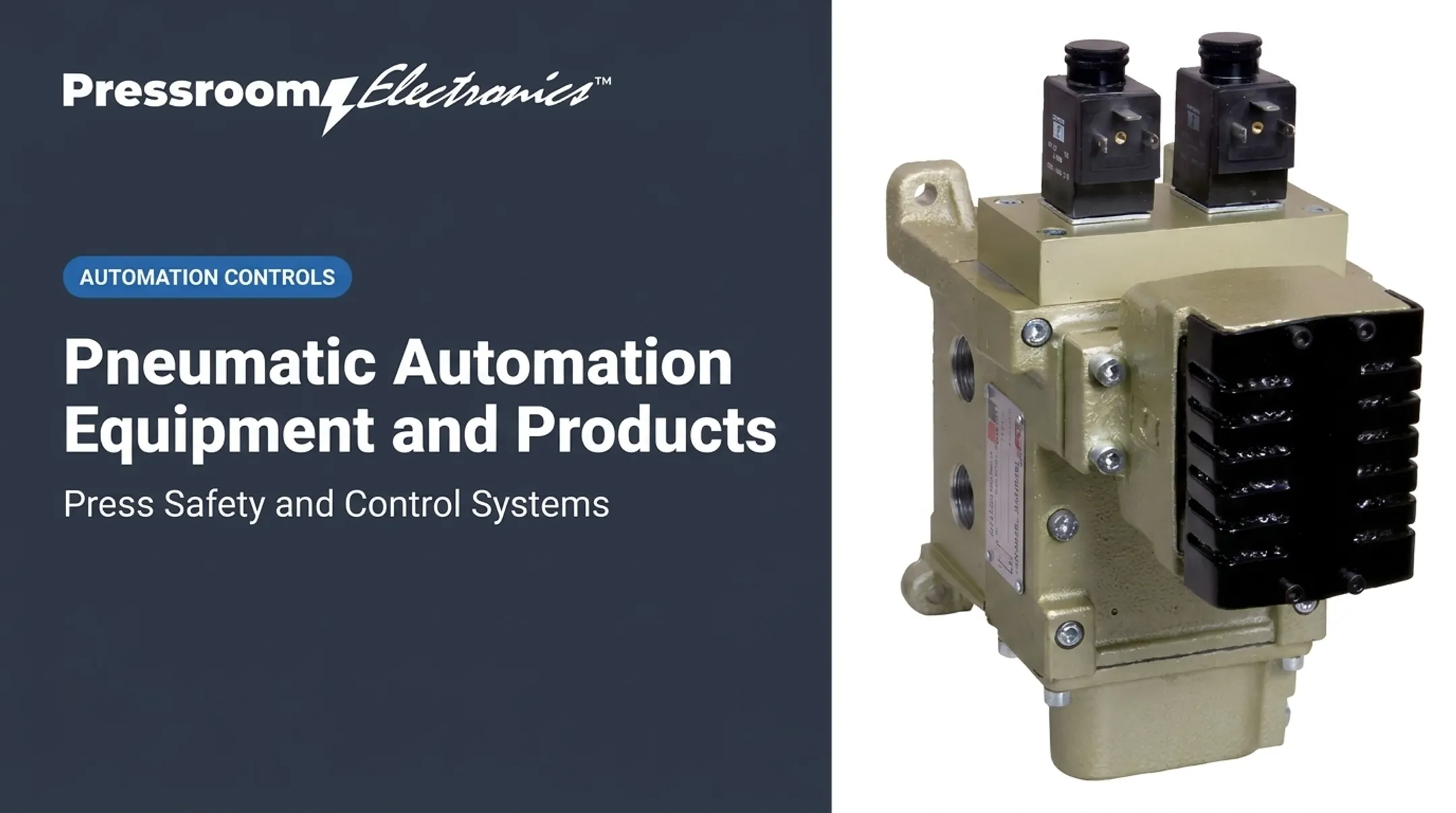
Press circuits show a related principle. The dual solenoid valve used in press control systems has two separate 3/2 normally closed elements in one body, each operated by its own solenoid pilot valve. Both open together when both pilots energize. The documented rationale is that both elements failing on the same cycle is extremely remote. The design value is the redundancy itself rather than a published conversion metric.
The takeaway: valve architecture is a circuit decision, tied to monitoring and control reliability.
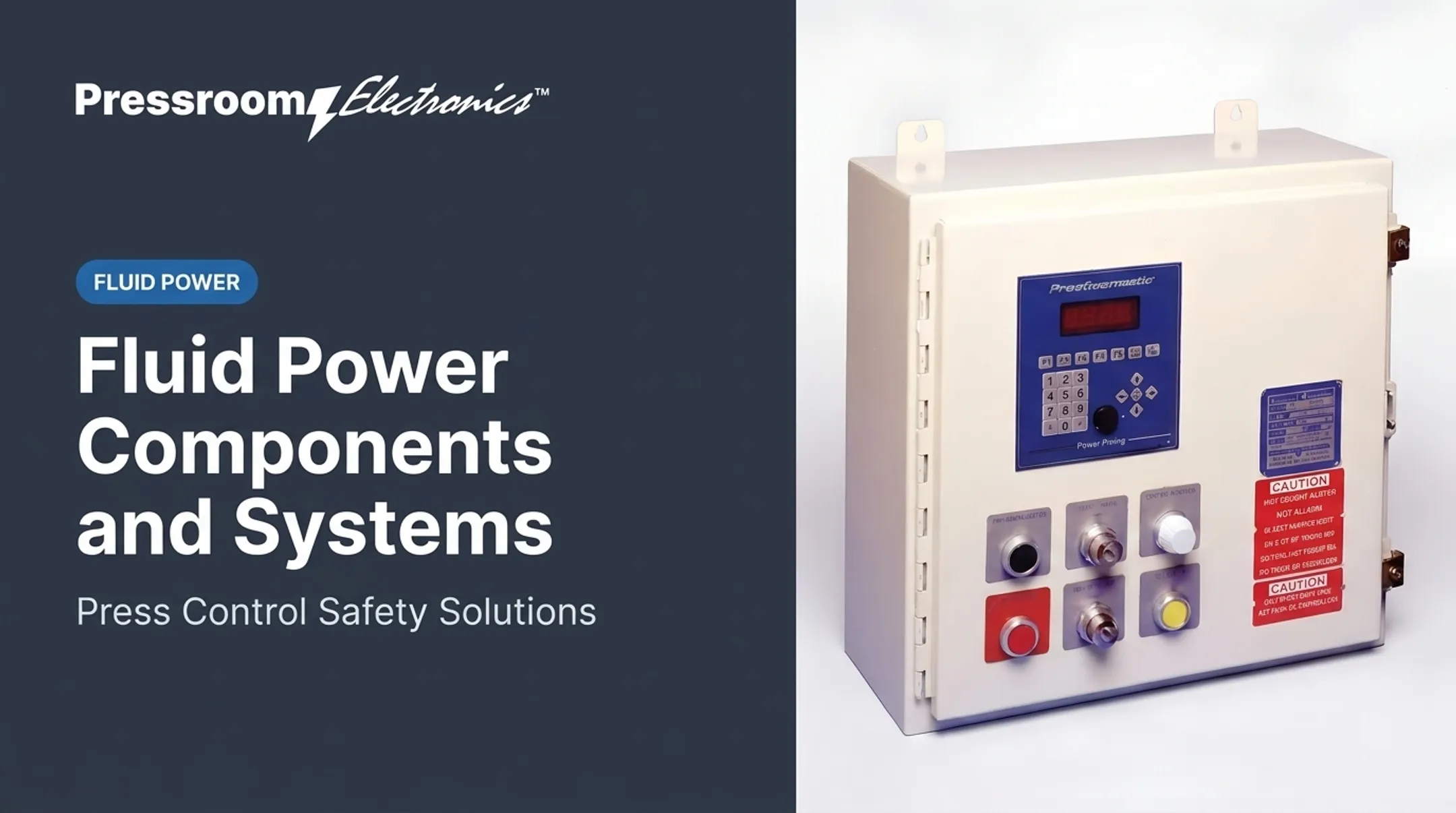
Planning a mechanical press retrofit or press-control upgrade? Pressroom Electronics can discuss clutch/brake controls, brake monitoring, guarding, die protection, and production monitoring for your application.
Conclusion
Choose a direct-acting valve when pressure is absent, low, unstable, or likely to vary. Consider a pilot-operated valve when the system provides dependable differential pressure and needs more flow. Final selection must follow the manufacturer's pressure and flow ratings for the exact model.
Before installation, confirm:
- Pressure and differential
- Media and temperature
- Flow, fail state, and voltage
- Duty cycle and maintenance conditions
Matching the valve to the full machine cycle protects productivity, reliability, and safe operation better than buying the cheapest option.
Frequently Asked Questions
What is the difference between pilot-operated and direct-operated solenoid valves?
Direct-operated (direct-acting) valves move the main plunger with the coil. Pilot-operated valves use the coil to control a pilot passage and rely on pressure assistance to move the main seal.
How do pilot operated solenoid valves work?
The coil opens a small pilot orifice, changing pressure balance across the diaphragm or piston. The main seal then lifts, provided minimum differential is met. De-energizing restores the balance and closes it.
What is the difference between internal and external pilot solenoid valves?
Internal-pilot valves use inlet process pressure. External-pilot valves use a separate pressure source, which may need extra tubing and controls.
What is a pilot valve used for?
A pilot valve controls a smaller passage or signal that helps operate a larger valve. A small electrical or pneumatic input then controls much higher flow.
How to tell if a solenoid valve is working?
De-energize and isolate equipment first. Then check supply voltage, coil actuation (click or magnetism), inlet and outlet pressure, flow direction, pilot blockage, leaks, and whether minimum pressure is met.
What are solenoid operated valves?
They use an energized coil to move a valve element, regulating, shutting off, releasing, or directing liquid or gas flow.