Introduction
A start-stop-jog push button control station is a local operator interface. It sends commands to a machine-control circuit, relay, contactor, or PLC, usually as a low-power control signal rather than motor power.
The three functions do different jobs:
- Start enables normal operation
- Stop removes the run command
- Jog (or inching) allows brief movement for setup, positioning, inspection, or maintenance
The trouble starts when people treat the buttons as the whole system. Contact logic, restart behavior, and safety boundaries decide whether a station is suitable. This article covers operation, contact logic, safety limits, and selection, with press applications in mind.
Key Takeaways
- A conventional Start is momentary and normally open; a conventional Stop is normally closed.
- Jog should run only while held and must never latch into continuous operation.
- Contact arrangement, ratings, enclosure, and control logic must match the application.
- A standard Stop or Jog station is not an emergency stop or a complete safeguarding system.
What Is a Start-Stop-Jog Push Button Control Station?
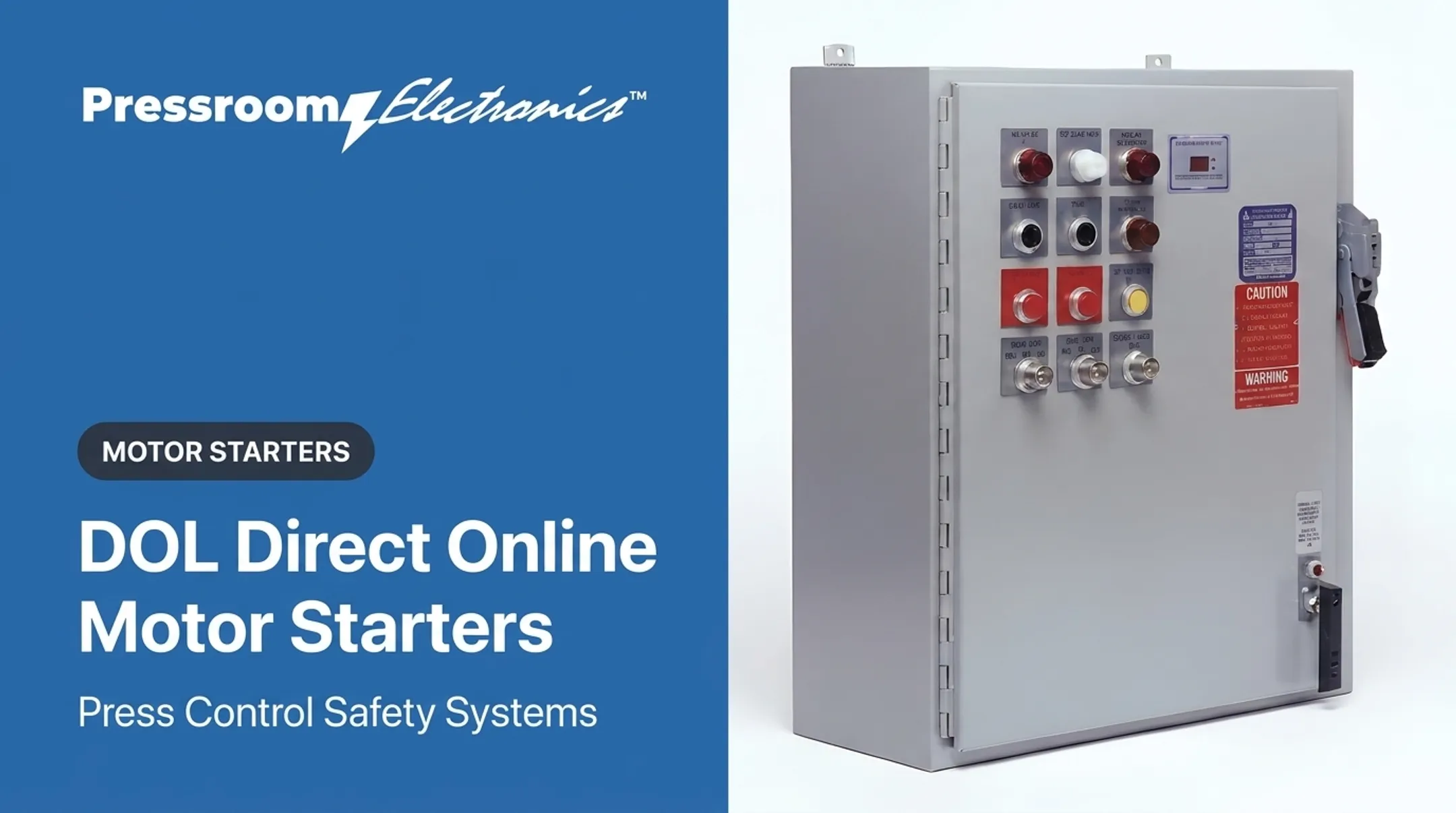
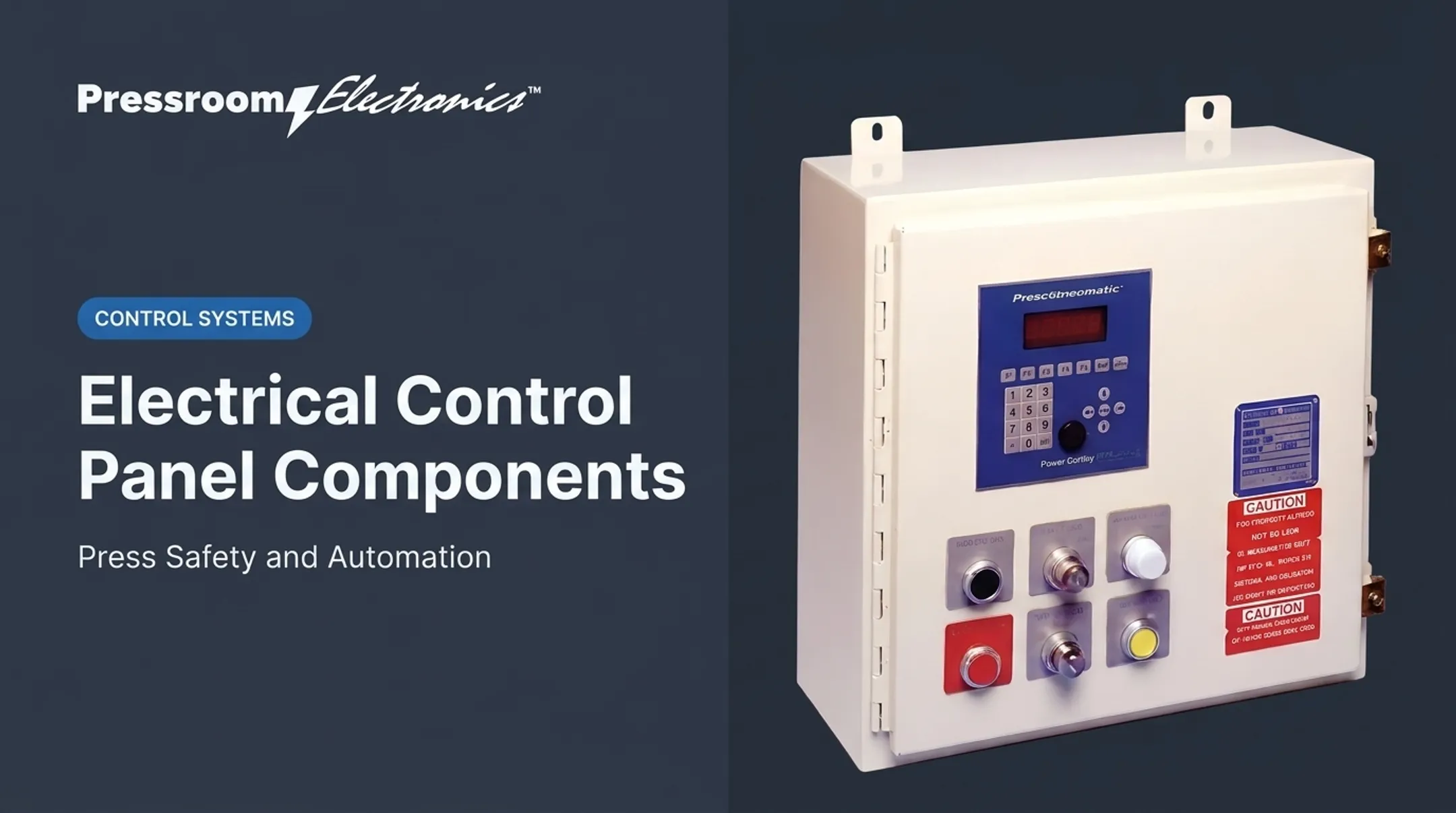
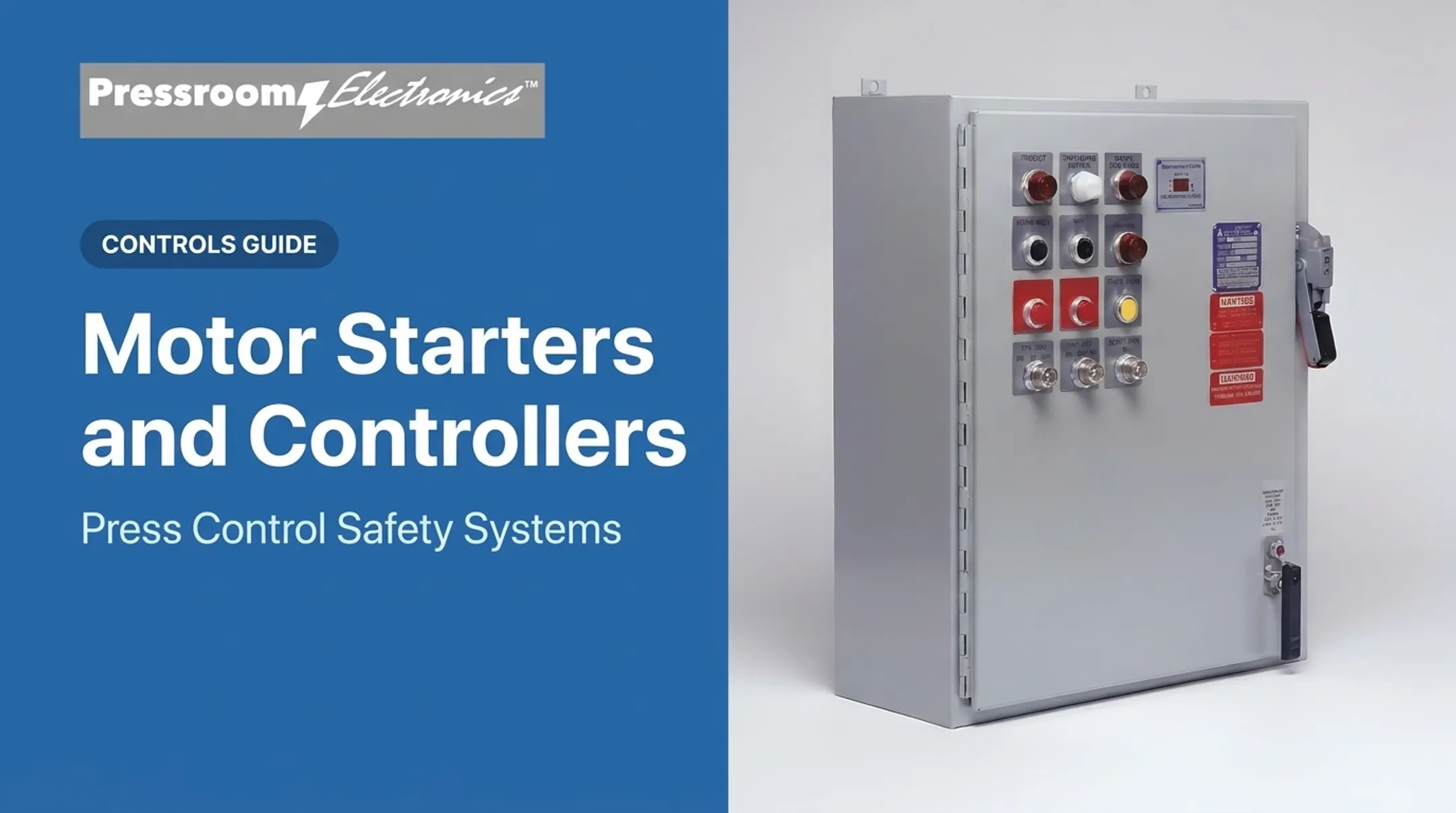
A start-stop-jog push button control station is an enclosed assembly that holds operator actuators, contact blocks, terminals, wiring provisions, and sometimes status lights. It switches control signals, not motor or press power directly. Schneider Electric's 9001BG316 station is one documented example: a momentary START/JOG/STOP unit in a NEMA 1 enclosure.
A dedicated station is most useful when the main control cabinet sits away from the operator. It puts controls within reach, keeps the work in clear view during setup, and stops people from repeatedly opening an electrical enclosure.
Start, stop, and jog functions
- Start: a momentary command that initiates a run circuit or PLC input.
- Stop: interrupts or removes the run condition, and takes priority over Start.
- Jog: a momentary command for short, controlled movement.
"Jog" and "inching" usually describe similar momentary movement. Neither term alone defines the circuit behavior, speed, or safety function.
Where these stations are used
Typical uses include mechanical punch press setup, feeder positioning, conveyors, pumps, and forming equipment. Any machine that needs both continuous running and precise setup movement is a fit.
A station can be a single-function unit, a combined start/stop unit, or a start/stop/jog arrangement. The machine's control architecture decides.
Dedicated controls versus dual-purpose controls
Separate Start, Stop, and Jog buttons are usually easier to understand than a selector that changes what one button means. Operators should be able to:
- Identify the active mode at a glance
- Predict the result of each action
- Stop the machine without ambiguity
How Do Start, Stop, and Jog Functions Work?
The sequence is simple in concept. The station changes contact states. Those contacts affect a relay, contactor, safety controller, or PLC input. The control system then decides whether the machine may run.
Start and the seal-in circuit
Pressing a normally open Start button briefly completes the start path. The control device energizes, and an auxiliary contact (or PLC logic) holds the run command after release.

- Press Start.
- The contactor or control relay energizes.
- The holding path seals in.
- Release Start.
- The machine keeps running only while all permissive and safety conditions stay satisfied.
Stop and stop priority
A normally closed Stop contact stays closed during normal operation and opens when pressed, dropping the run command. Stop should override Start and Jog. Overloads, guarding interlocks, and other conditions can also interrupt the circuit.
Jog or inching operation
Jog energizes the motion command only while the button is held. Rockwell's typical wiring diagrams show Jog that never locks in.
Timing matters. A BCcampus motor-control text describes a hazard: if the normally closed contact returns before the starter armature drops out, the motor can keep running after release. Evaluate the actual relay, contactor, PLC, and interlock timing. Don't copy an unverified diagram.
Power interruption and restart behavior
Three-wire control (momentary Start/Stop with a holding contact) requires a deliberate new Start after power dropout. Two-wire maintained control can restart on its own when power returns if the pilot contact stays closed.
Which is correct depends on the machine risk assessment and control design. Always follow the machine-specific schematic, lockout/tagout procedure, and qualified commissioning for your equipment.
Relay logic, PLC logic, and status indication
Hardwired relay logic and PLC logic can both provide latching, interlocking, overload monitoring, and jog behavior. Timing, diagnostics, and programming methods differ.
Run lights should reflect the actual contactor or machine state. A fault or overload indication must never suggest the machine is running when the equipment is unavailable.
Components, Safety, and Installation Boundaries
Push buttons, contact blocks, and station hardware
A station includes the actuator, NO and NC contact blocks, enclosure, terminals, cable entries, labels, and optional pilot lights. Check the configuration against the control schematic and control voltage.
Color alone is not a selection criterion. Schneider's color FAQ, citing IEC 60204-1, lists white as preferred for Start and black for Stop, so green/red is not the only convention. Verify contact arrangement, rating, mechanical action, reset behavior, and compatibility with the connected device.
Safety functions that should not be conflated
A standard Stop is not an emergency stop. An e-stop typically needs:
- A latching actuator
- Deliberate reset that does not restart motion
- Suitable safety contacts
- Integration into the safety-related control system
A push button station also does not replace guarding, light curtains, interlocks, brake monitoring, or overload protection. OSHA's lockout/tagout rule states that pushbuttons and other control-circuit devices are not energy-isolating devices, so Stop is never a substitute for lockout.

For mechanical power presses, 29 CFR 1910.217 adds specific rules:
- Motor Start buttons must be protected against accidental operation.
- Inch operation needs two-hand control, or a single control protected against accidental actuation and placed out of reach of the point of operation.
- A momentary press of the red Stop must disengage the clutch and apply the brake.
Installation and compliance checks
Review the applicable OSHA, ANSI, NFPA, and machine-specific requirements, and confirm current editions and product documentation before installing. Qualified personnel should wire, test, and commission the station. Checks should cover:
- Stop priority
- Jog release behavior
- Power-loss response
- Overload response
- Unintended restart
- Correct status indication
How to Choose a Start-Stop-Jog Control Station
Identify the required machine functions first
List what the machine actually needs:
- Continuous run
- Normal Stop
- Momentary Jog/Inch
- Reset and emergency stop
- Mode selection and fault indication
- Remote or local control points
That list tells you whether you need separate buttons, a combined station, selector switches, indicator lights, or extra control modules.
Match contact configuration and electrical ratings
Verify these before ordering:
- NO or NC requirements
- Control-circuit voltage
- Contact current and utilization ratings
- Coil or input characteristics
- Inductive-load requirements
- Number of poles and available auxiliary contacts
One ampere figure doesn't tell the story. Schneider's pushbutton catalog separates thermal current from operational ratings at specified voltages under AC-15 or DC-13. Those are control-load categories. Don't assume a station can switch a motor, clutch, or brake directly.
Select enclosure and environmental protection
Consider dust, oil, moisture, washdown, vibration, temperature, impact, outdoor exposure, and mounting location. Common NEMA types map roughly as follows:
- NEMA 4: washdown
- NEMA 4X: corrosive settings
- NEMA 12: indoor dust and dripping liquids
- NEMA 13: oil and coolant
NEMA 1 is not a washdown rating. IP and NEMA types are not equivalent.
The rating also applies only to the finished installation. Poorly seated covers, damaged gaskets, wrong cable glands, or open knockouts void the protection.
Design the operator interface for predictable use
Use clear labels, logical arrangement, accessible placement, tactile distinction, and visible status feedback. Choose a dedicated Jog button where an ambiguous mode could cause unexpected motion. Test before release:
- Does Stop override every run command?
- Does Jog stop when released?
- Can a power interruption cause an unintended restart?
- Does the indicator show the true machine state?
Apply the choice to pressroom and machine-builder projects
On a punch press or press retrofit, the station rarely works alone. It must coordinate with clutch/brake controls, brake monitoring, guarding, and die protection.
Pressroom Electronics designs press controls in the USA, including customized press-control applications and integrated safety and monitoring. Its PressCommander station, for example, pairs two palm buttons with a red emergency stop and yellow stop-on-top button.
Its Inch mode is for die setting only, stops the slide when either palm button is released, and carries a 15-stroke limit. Palm buttons are placed at least 25 inches apart, and the instructions say not to rewire them.

When requesting an engineered recommendation, supply:
- Machine-control documentation and the existing schematic
- Control voltage
- Environmental conditions
- Desired button functions
- Required safety interfaces
Conclusion
A start-stop-jog station is the operator-facing part of a larger control system. Start initiates operation, Stop removes the run command, and Jog gives controlled momentary movement.
Before selecting or modifying one, confirm the contact logic, predictable operator behavior, environmental suitability, and integration with the machine's safety architecture.
Frequently Asked Questions
What is a jog push button?
A jog push button commands momentary machine movement, typically only while held. It is commonly used for positioning, setup, inspection, or inching.
What is a stop push button?
A conventional stop push button interrupts the run-control circuit, typically through an NC contact. It is not automatically equivalent to an emergency-stop device.
What is the difference between a start-stop station and a start-stop-jog station?
A start-stop station provides continuous latched operation through Start and Stop. A start-stop-jog station adds a momentary movement function that runs only while Jog is held.
Should a jog push button be normally open or normally closed?
Jog commonly uses an NO momentary contact. The final arrangement depends on the machine's relay, PLC, interlock, and safety logic.
Can a start-stop-jog station be used as an emergency stop?
No, not automatically. Emergency-stop functions need purpose-designed hardware integrated into the complete safety-related control system.