Introduction
A stamping plant runs on moving parts: people, presses, coil stock, tooling, schedules, inspection plans and delivery dates. Then a die jams, a rush order lands, or a material lot arrives late, and the plan stops matching the floor.
A production control system closes that gap. It combines processes, data, controls and software to turn a production plan into coordinated execution. This article covers what these systems are, what they do, a five-step control process, the main system types and technologies, and how to choose and implement one.
Key Takeaways
- Production control links plans to shop-floor execution and corrective action.
- A closed loop catches deviations early so supervisors act on evidence, not guesses.
- Scheduling, materials, capacity, quality and machine data all feed the loop.
- The right system fits your production model, equipment, data maturity and operators.
What Is a Production Control System?
Production control is the day-to-day management and monitoring of production orders, resources, workflows and output. The goal is to keep work aligned with time, quantity, quality and cost requirements.
Planning vs. Control
Planning picks methods and resources and sets what should be made and when. Control releases, sequences, monitors and adjusts work as real conditions change. OpenStax's textbook draws the same line: planning establishes methods and resources, while control handles scheduling and actual daily operations, quality and costs.
How It Differs From Related Functions
- Quality control focuses on conformance to requirements.
- Production monitoring provides visibility into what is happening.
- ERP coordinates enterprise and order data: master records, bills of materials, purchasing, inventory.
- MES connects planning to shop-floor execution and records actual inputs and outputs.
- Machine controls govern equipment behavior.
The ISA-95 standard places these on separate levels: business planning, manufacturing operations, and physical control. That doesn't mean each needs its own software package.
A Closed Control Loop
The system plans the work, executes it, captures actual results, compares them with the plan, flags deviations and triggers corrective action. Without the feedback half, you have a schedule, not control.
Example: A Stamped-Part Order
- The order is checked against coil availability and press capacity.
- The job is scheduled to a press and the die is set up.
- Production runs while counts and status are captured.
- Inspection checks parts at defined intervals.
- Any stoppage is logged with a reason.
- The order closes when the quantity is complete and the data returns to planning.
Why Production Control Systems Matter and What They Do
The core objectives are straightforward:
- Meet delivery commitments
- Use machine and labor capacity well
- Hold product quality
- Limit work-in-process and inventory exposure
- Cut avoidable downtime and waste
Planning, Scheduling and Materials
The system translates demand into routings, assigns work centers, sequences jobs and accounts for setup time. Finite capacity matters here: it assigns no more work to a center than it can execute in the period. Urgent orders and equipment constraints force reshuffles, so the schedule must be easy to change.
Materials and resources follow the same logic. The system checks component availability, reserves stock, coordinates purchasing and aligns labor with machines. One of its highest-value jobs is preventing a job from starting without its inputs.
Execution and Quality
This layer covers the shop-floor loop:
- Work-order release
- Digital or paper instructions
- Quantity and status reporting
- In-process inspection and traceability
Defects and deviations need a clear escalation path, not a note on a clipboard.
Real-Time Data
Useful measures include downtime, throughput, scrap, lead time, schedule adherence, utilization, OEE and on-time delivery. OEE equals availability × performance × quality. The oft-cited 85% "world-class" figure is a historical heuristic attributed to Seiichi Nakajima's work on TPM, not a universal target. Judge your plant against its own baseline first.
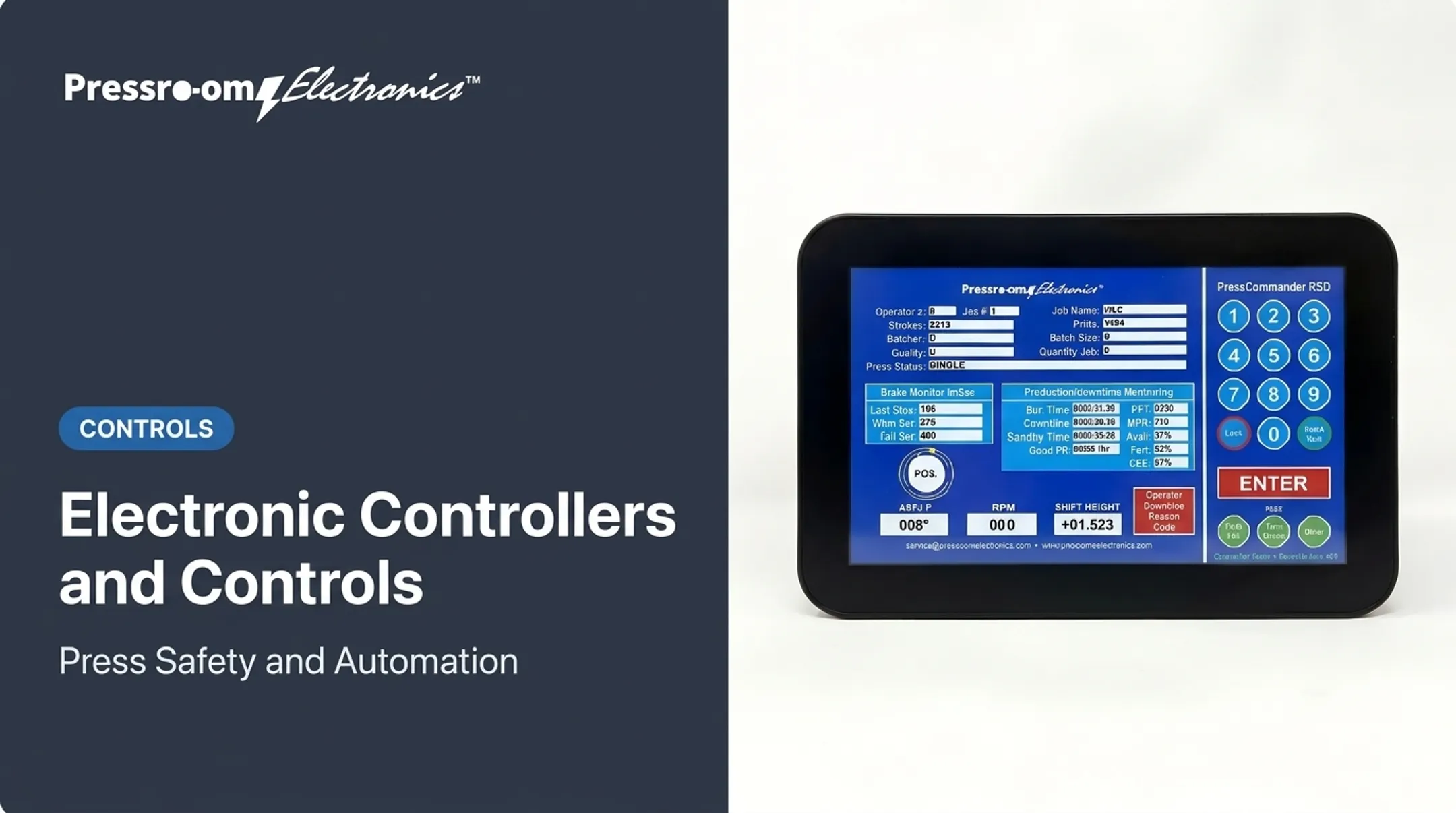
Pressroom Electronics' operator-screen example shows how this looks on a press: 97% availability, 65% performance and 63% OEE over a 21-minute run. A glance tells the supervisor that speed, not stoppages, is the loss.

The Five-Step Production Control Process
Production control is often split into four, six or more activities. The five-step grouping below maps routing, scheduling, dispatching, follow-up, inspection, corrective action and feedback into one framework. It is a practical grouping, not a mandated standard.
Step 1: Plan and Set Priorities
Demand, customer commitments, capacity, inventory and strategy become production orders and priorities. Aggregate planning sits above this. It balances demand, capacity, labor and inventory for product families, and it informs shop-floor control without replacing it.
Step 2: Route and Schedule
Define the operation sequence, required machines and labor, material timing, setup needs and start and finish dates. Bottlenecks decide the real schedule.
At Ohio-based Stainless Works, a NIST MEP case found incorrect routings feeding bad data into the ERP. After routings were corrected and welding was identified as the bottleneck, reported lead time fell from 12-14 weeks to 5 weeks. The fix was better data and constrained scheduling, not new software.
Step 3: Dispatch and Execute
Release the order, stage material, issue instructions, assign the machine and have the operator acknowledge the job. This is the handoff from a planned schedule to active work.
Step 4: Monitor, Inspect and Compare
Track machine status, counts, quality checks, downtime events, shortages and labor constraints against the plan. Late or inaccurate data defeats the purpose, since a supervisor who learns of a stoppage at shift end can't recover it.
Step 5: Correct, Learn and Improve
Supervisors respond by resequencing, reassigning, escalating maintenance, recovering material or containing quality problems. Reason codes and root-cause analysis then improve future plans.

A Note on the "5 P's"
Operations textbooks list the 5 P's as Product, Plant, Processes, Programs and People, though wording varies by source. They are management dimensions for planning, not a replacement for these five control steps.
Types, Technologies and Data in Production Control
Push, Pull and Hybrid
- Push: work is released on a schedule planned in advance from forecasts. It suits stable, predictable demand.
- Pull: downstream consumption signals upstream production, often by kanban. It suits variable demand and tight inventory goals.
- Hybrid: forecast-driven components are built ahead, and final work is triggered by orders. MIT supply chain materials describe this as postponement.
These describe release logic, not a software hierarchy.
The Technology Stack
- ERP: orders, bills of materials, purchasing, inventory, master data
- MES: shop-floor execution and actuals
- APS: detailed, finite-capacity scheduling
- Machine controls, sensors and connected devices: equipment-level data
Dashboards, alerts, operator screens, digital work instructions, barcode or QR verification and remote access turn that data into action.
Metal Stamping in Practice
Stamping shows the equipment layer clearly. A MetalForming case on Wiegel Tool Works (2016) tracked shop-floor signals such as:
- Machine status and part counts
- Downtime reasons and OEE
- Changeover times and tool hits between maintenance
Die protection adds its own signals, such as material buckle, end-of-material and part ejection, to stop the press before damage.
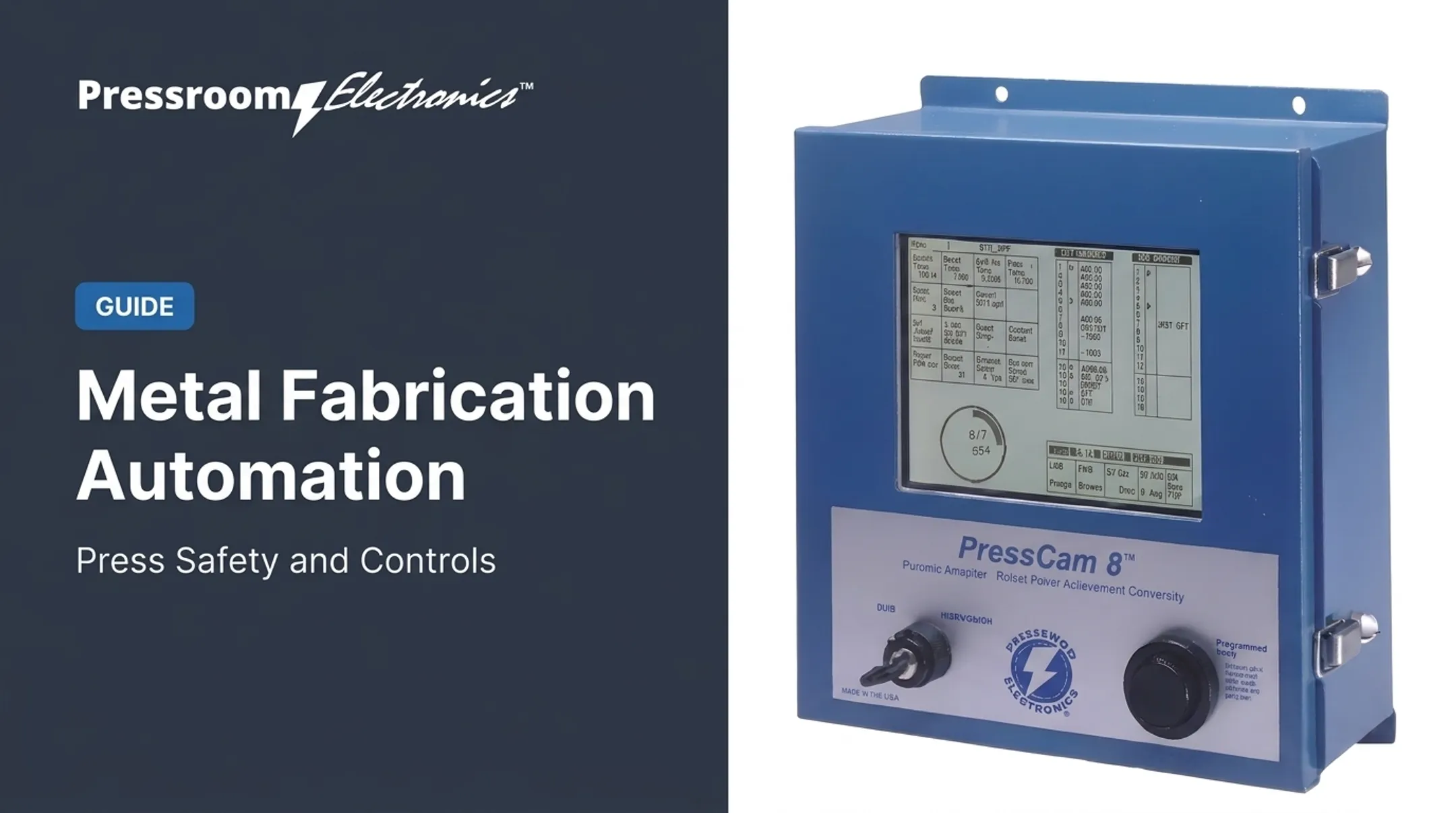
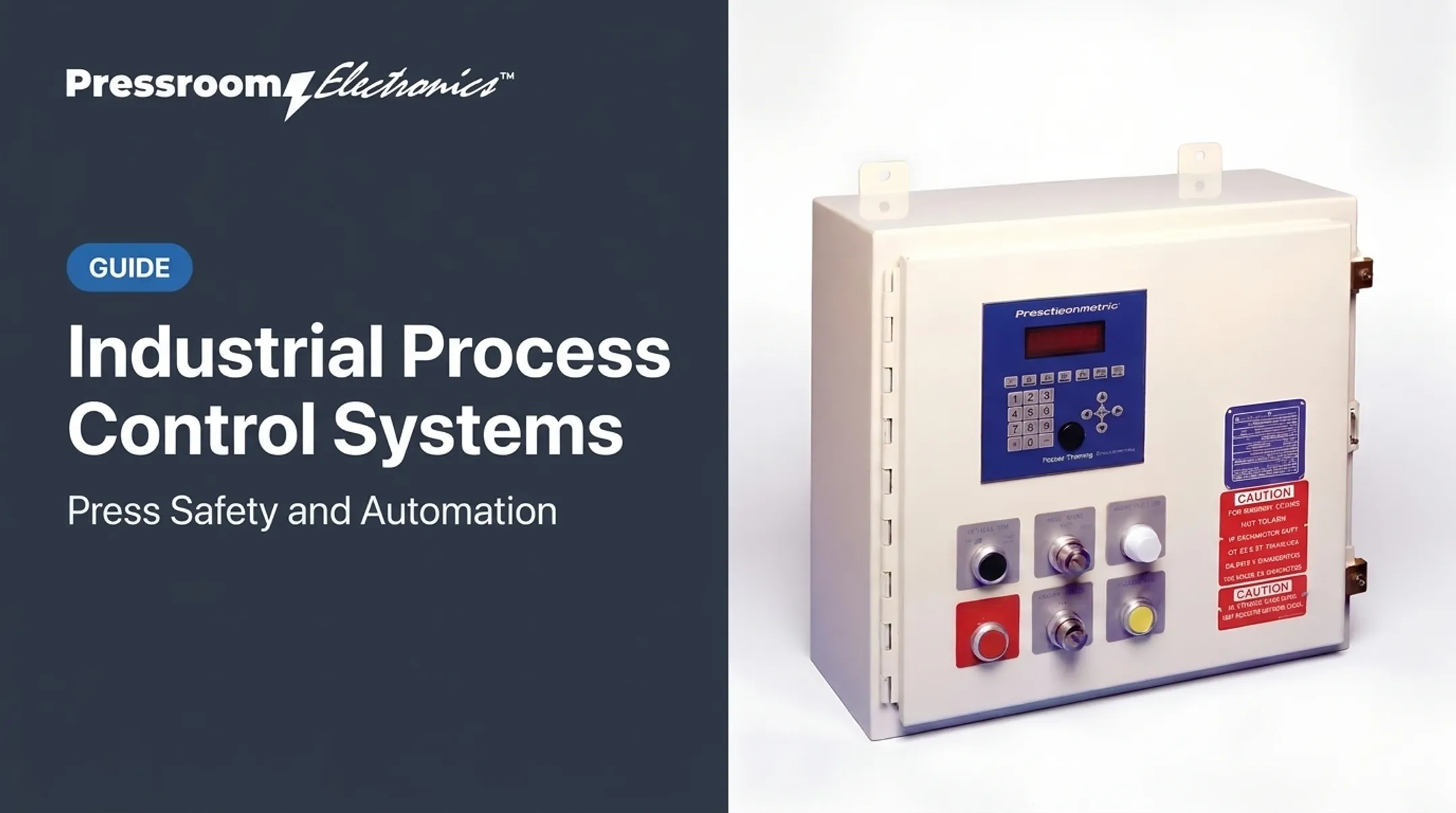
Press-level controls and monitoring complement the broader stack. Pressroom Electronics builds customized pressroom controls and automation, including production and downtime monitoring with up to 20 programmable reason codes. These supply machine data. They don't replace an ERP, MES or full production management platform.

Keep safety functions such as guarding and OSHA 1910.217 compliance separate from production scheduling, even when signals share a press.
How to Choose and Implement a Production Control System
Define Requirements First
Before comparing vendors, document:
- Your manufacturing model and production mix
- Work-order volume and number of work centers
- Machine age and connectivity
- Scheduling complexity
- Required data frequency
- Existing ERP or MES
- The decisions the system must support
Evaluate Beyond the Dashboard
Look for capabilities that hold up on the floor, not only on a demo screen:
- Reliable machine and operator data capture
- Configurable reason codes and bottleneck visibility
- Traceability, alerts, and role-based access
- Integration options, edge or remote operation, and scalability
Test usability with actual operators. Confirm clear boundaries between production control and safety functions.
Implement in Phases
- Baseline current performance.
- Clean master data, including routings and work centers.
- Pilot on a representative line.
- Train operators and supervisors.
- Validate alerts and workflows.
- Review data quality, then expand only after hitting agreed outcomes.
A phased rollout reduces risk. An Automation World report describes one client that started with a small cross-section of machines. Another skipped older-machine connectivity checks, which delayed the project and added cost.
Adoption matters too. Greater visibility can feel threatening to employees, so involve them early. Pressroom Electronics' implementation approach reflects this, using four phases (understanding the mechanics, interpreting data, using data, continuous improvement) plus daily review meetings built on system-reported downtime data.
Published cases show what is possible, not guaranteed ROI. M R Products, a plastic-chain maker, reported 20% annual capacity growth after adding machine monitoring; treat that figure as company-reported and cross-industry, not a promise for every plant.
Frequently Asked Questions
What are the 5 steps of the control process?
Planning, routing and scheduling, dispatching and execution, monitoring and inspection, and corrective action with continuous improvement. Different frameworks group these stages in slightly different ways.
What is aggregate production planning?
It balances expected demand, capacity, labor, inventory and output for product families at a high level. Detailed production control follows from it.
What are the 5 P's of production management?
Product, Plant, Processes, Programs and People, though the exact labels differ. They are planning dimensions, not the five operational control steps.
What is an example of a production system?
A make-to-order stamping line: coil is the input, presses and dies the equipment, operators the people, stamping the process, finished parts the output, and status, counts and downtime reasons the feedback.
How is production control different from production planning?
Planning sets requirements and expected timing. Control releases work, monitors actual performance and adjusts when conditions change.
What should a production control system monitor?
Work-order status, machine availability, counts, downtime reasons, quality results, material availability, labor and capacity constraints, lead time and schedule adherence.