Introduction
In 2024, OSHA cited a Cleveland bakeware manufacturer after two press amputations: one on a power press on June 25, and another on July 11 while a worker cleared scrap from a mechanical press.
OSHA's December 2024 release described unguarded machinery and unexpected cycling during servicing. That is a single employer's case count, not a national rate.
The consequences reach well past the injured worker. Stamping plants face lost workdays, stopped lines, damaged tooling, OSHA exposure, and legal and insurance costs.
Punch presses are high-risk because they combine stored energy, heavy dies, automatic cycling, sharp stock, and several access points. Safety depends on three things working together: safeguarding, competent people, and procedures people actually follow. This guide covers how those pieces fit on the press floor, what OSHA and ANSI expect, and how to choose safeguards that hold up in production.
Key Takeaways
- Safeguards must block every route to the die: over, under, around, sides, rear, feed, and scrap exit.
- No device suits every press or task; select, install, test, and maintain each one.
- Never bypass guards, defeat interlocks, or clear jams without energy isolation.
- Review OSHA rules, ANSI standards, manufacturer instructions, and a documented risk assessment together.
Safety Guidelines for Punch Press Safety and Safeguarding
What counts as a punch press
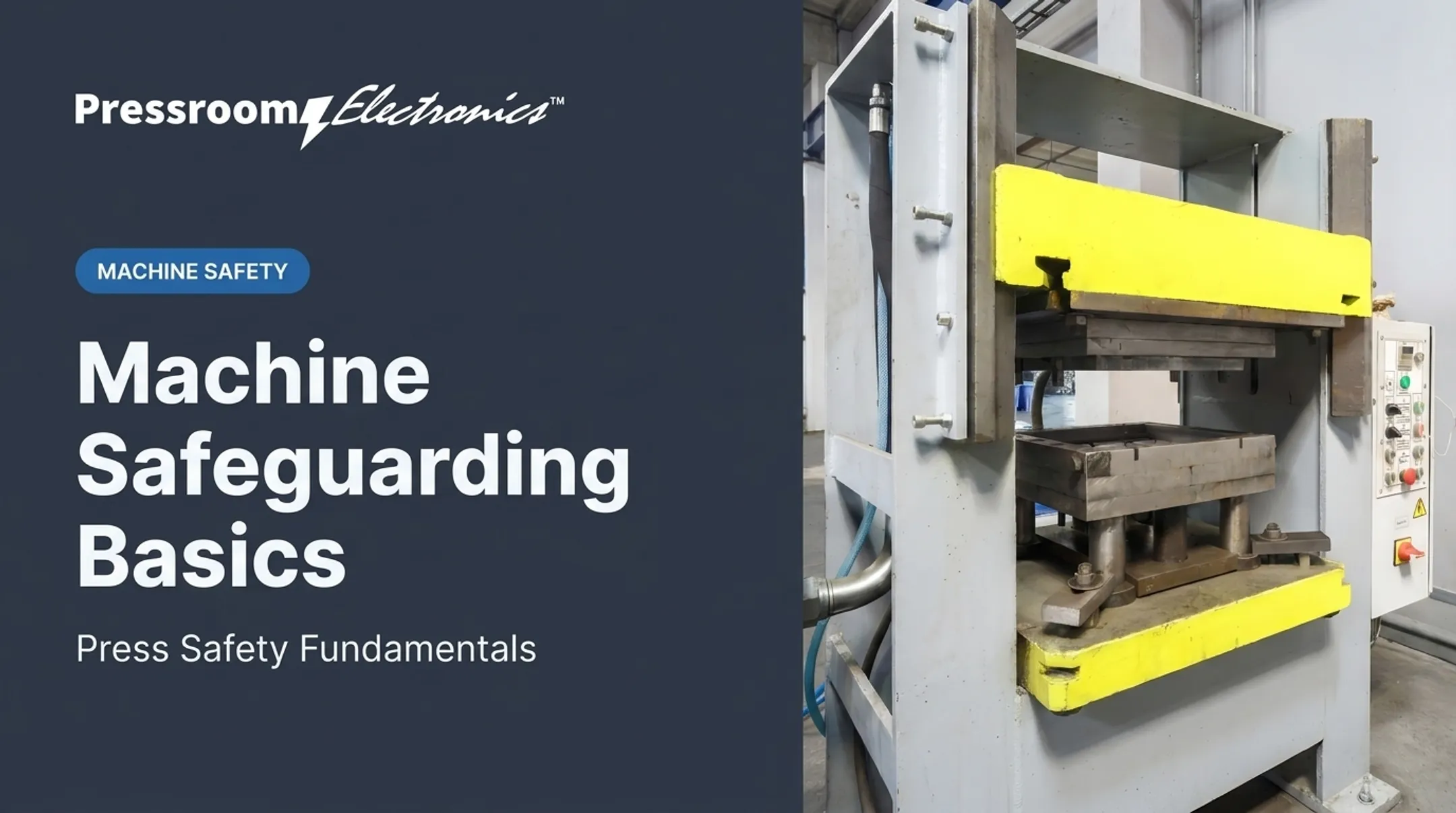
A punch press uses a punch and die to cut, pierce, form, or shape material. This article focuses on mechanical power presses, which OSHA covers under 1910.217. That standard excludes press brakes and hydraulic or pneumatic presses, though the same safeguarding principles still help on those machines.
Start with a task-based hazard analysis
Review every task, not just production cycling:
- Loading and feeding stock
- Part removal and scrap handling
- Die changes and setup
- Troubleshooting, cleaning, and maintenance
Hazards to address
- Point-of-operation crushing and amputation
- Pinch and shear points
- Unexpected cycling
- Stored mechanical, pneumatic, hydraulic, or electrical energy
- Flying parts, sharp stock, and noise
- Feeds, conveyors, robots, and other auxiliary equipment
Safety is a system
Engineering safeguards are the primary control. Training, procedures, supervision, PPE, inspections, and maintenance support them. Safeguarding is ongoing work:
- Documented pre-shift checks
- Periodic inspections
- Stop-time or brake-performance verification where applicable
- Retraining after changes or incidents
- Immediate correction of failed protective systems
General Safety Precautions
PPE and work area
Base PPE on your documented hazard assessment and the machine's instructions. Typical items:
- Eye and face protection
- Safety footwear
- Hearing protection where required
- Close-fitting clothing and hair restraints
- Cut protection for material handling, if it creates no entanglement hazard
Keep the area clean, well lit, and unobstructed, with clear access to controls, E-stops, exits, and walkways. Poor housekeeping causes slips and struck-by injuries. It also creates pressure to bypass guards.
Material handling
Use lifting equipment, carts, supports, or team handling for heavy, sharp, or unstable stock. Use feeding aids instead of hands near the die. Hand tools supplement required guarding; they never replace it.
Pre-start check
Before each shift, check:
- Guard condition and interlocks
- Light curtains or other presence-sensing devices
- Two-hand controls, anti-repeat, and foot controls
- Emergency stops
- Abnormal noise, leaks, loose parts, and visible damage
Pressroom Electronics' manuals call for testing the entire machine safety system at the start of every shift, including stopping capability and guard and device settings.
When to pull a press from service
Remove the press from service until qualified personnel evaluate and repair it if you find any of the following:
- Failed safeguard
- Damaged die
- Unexpected movement
- Brake-monitor fault
- Missing guard
- Unclear operating condition
Safety During Installation
Risk assessment and site preparation
Begin with a site-specific risk assessment covering the press, die, feed, conveyors, scrap discharge, automation, nearby equipment, operator positions, and every foreseeable access route. Then check the site:
- Floor capacity and anchoring
- Clearance and blocked egress
- Control placement and lighting
- Protection for guards and sensors from impact during die loading
Lifting, positioning, and energy isolation
Use manufacturer-approved lifting methods and qualified installers for the press, dies, guards, sensors, and control stations. Isolate electrical, pneumatic, hydraulic, and mechanical energy when installation exposes workers to hazardous motion or stored energy.
Stop installation if you find:
- Missing documentation or unclear energy sources
- Failed interlocks
- Unverified stopping performance
- An incomplete guarding design
Integrate, don't bolt on
Clutch/brake controls, brake monitoring, guards, light curtains, two-hand controls, interlocks, E-stops, and die protection must work as one system. OSHA's own unintended cycling bulletin describes a guarded 60-ton part-revolution press that double-cycled during jam clearing, amputating three fingers. An electrician later found the presence-sensing device wired from an incorrect schematic.

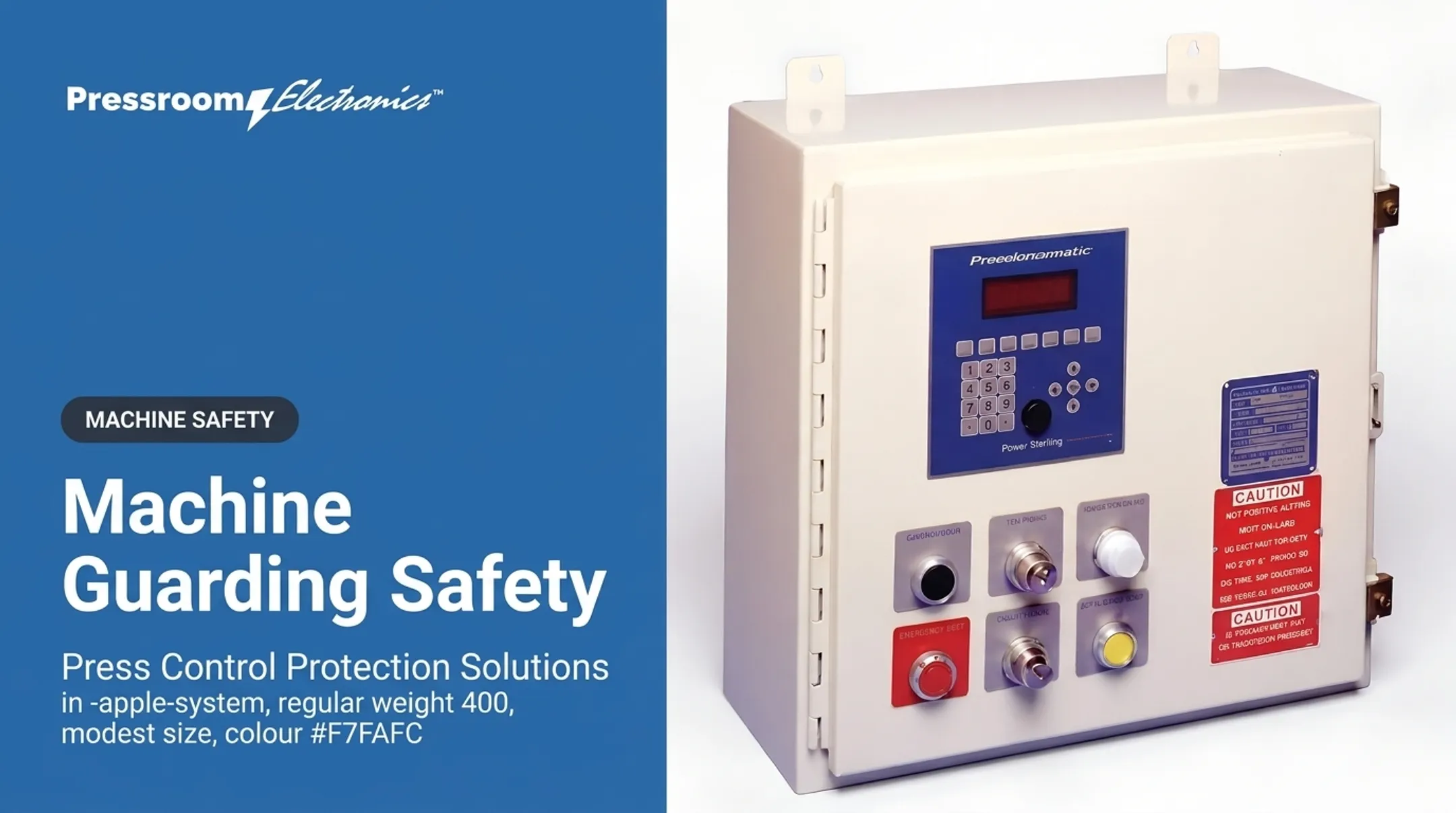
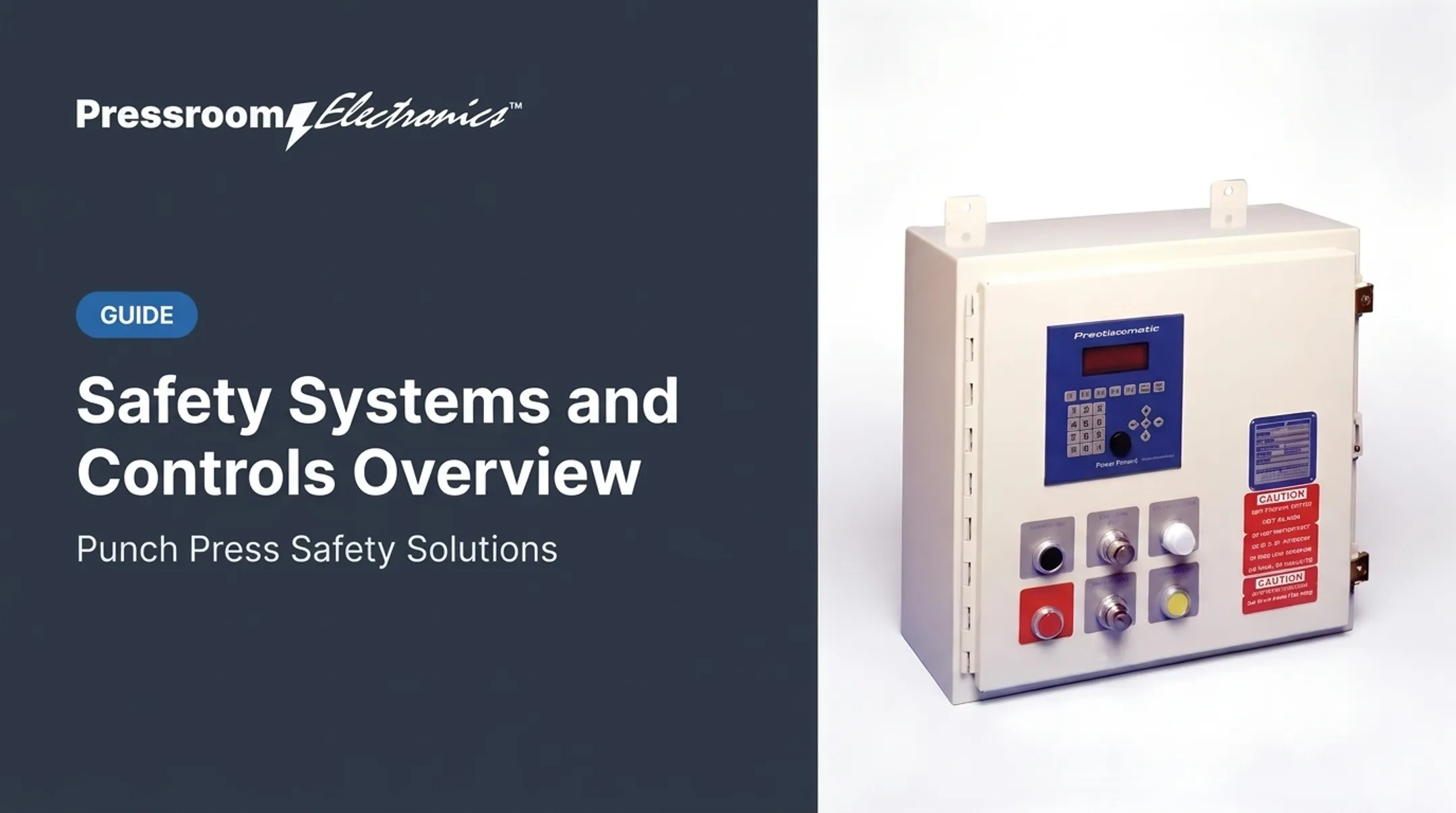
Pressroom Electronics provides customized punch press control applications and integrated solutions covering controls, automation, brake monitoring, die protection, and guarding. Consult qualified application specialists for machine-specific selection and integration.
Safety While Using or Operating a Punch Press
Operator responsibilities
Operators should:
- Complete required training (1910.217(f)(2) requires instruction in the safe work method)
- Inspect the machine and safeguards
- Follow approved setup and operating procedures
- Stay within assigned duties
- Report defects and near misses
- Stop the machine when conditions turn unsafe
Safe cycling
Keep hands and body outside the point of operation. Use approved feeding and removal tools, keep stable footing, and stay clear of moving stock and ejected parts. Never reach around or through a safeguard.
Use devices within their validated application
Light curtains, two-hand controls, guards, and interlocks protect only inside the application they were validated for. Watch for incorrect safety distance, inadequate coverage, reach-around access, damaged sensors, unauthorized blanking, and unsafe muting.
OSHA permits muting an ordinary presence-sensing device on the upstroke only for parts ejection, circuit checking, and feeding.
Setup, die changes, and jams
These are not normal production. Require your lockout/tagout procedure, stored-energy control, and verified zero energy. Use properly designed, interlocked die safety blocks.

A New York FACE investigation of a fatal mechanical press case found blocks without interlocks left on the bolster, no specific LOTO procedures, and no operator LOTO training.
Warning signs that demand a stop
- Unusual stopping behavior or inconsistent stroke performance
- Brake-monitor or control faults
- Unexpected cycling or failed anti-repeat
- Damaged guarding or sensor misalignment
- Abnormal vibration or leaks
- Repeated nuisance trips that tempt bypassing
Environmental and System Safety Considerations
Conditions that degrade protection
Temperature, moisture, dust, vibration, electrical disturbance, contaminated air lines, poor lubrication, and worn components all erode control and sensor reliability. OSHA requires protection against foreign material and water entering the pneumatic system. Clutch/brake controls must also deactivate on air-supply failure. Sensor limits are product-specific, so follow the manufacturer's ratings.
Guard the whole production system
Include feeds, straighteners, coil stock, conveyors, robots, transfer systems, scrap chutes, and part exits in the assessment. An operator should never reach an unguarded hazard while trying to keep material or scrap moving.
Safety distance
Position presence-sensing safeguards using validated values, not estimates:
- Stopping time, measured per the applicable standard
- Control and sensing-device response times
- Brake-monitor limits and brake wear
- Device detection characteristics
OSHA's formula for ordinary presence sensing uses 63 in/s multiplied by stopping time. Recalculate whenever stopping time or monitor settings change.

Gaps, blanking, and reach paths
Minimum object sensitivity matters. Gaps between beams can let a finger through, and blanking increases required safety distance. Check reach-over, reach-under, and reach-around paths near physical guards.
Changes require review
Modifications to dies, feeds, programs, controls, guard openings, or production flow call for a new risk review and possible revalidation by qualified personnel.
Common Safety Mistakes to Avoid
- Trusting a device without verification. A light curtain, two-hand control, or E-stop that is wrongly positioned or misses an access route gives false confidence while the point of operation stays exposed.
- Taking shortcuts. Bypassed interlocks, defeated anti-repeat, held-down foot controls, enlarged guard openings, and unauthorized muting or blanking lead to unexpected cycling and reach-in injuries.
- Assuming a stopped press is safe. A stopped ram or an off switch is not energy isolation. Die changes, jam clearing, and maintenance need full lockout/tagout and stored-energy control, not pushbuttons or selector switches.
- Treating warnings as production problems. Nuisance trips, brake-monitor faults, and odd stopping times are safety signals. Stop, document, find the root cause, and involve qualified personnel.
- Letting unqualified people touch safety controls. Only trained staff should repair, reprogram, or reposition safety-related controls. Document competency and retrain after changes.
Conclusion
Punch press safety rests on a complete system:
- Correctly designed guards and controls
- Validated stopping performance
- Proper energy isolation
- Trained operators and routine inspections
- A culture that does not reward shortcuts
The stakes are financial too. The National Safety Council estimates $48,000 per medically consulted injury in 2024, a general figure rather than a press-specific one.
Review each press and its surrounding system with qualified safety and engineering personnel. Then document corrective actions so workers stay protected and production stays reliable.
Frequently Asked Questions
What are the responsibilities of a punch press operator?
Operators complete pre-operation checks, use safeguards and PPE correctly, and follow authorized procedures. They report defects, never bypass protection, and stop work when conditions become unsafe.
What is a punching press?
A punching press uses a punch and die to pierce, cut, or form material. Mechanical power presses and other stamping equipment are the most common types.
What are the OSHA safety requirements for power presses?
OSHA 1910.217 covers point-of-operation guards, control reliability, brake monitoring, inspections, and training for covered presses. 1910.147 covers lockout/tagout. Confirm the current rule applies to your machine.
What safeguards are used on a punch press?
Common safeguards include physical guards, light curtains, two-hand controls, interlocks, awareness barriers, brake monitoring, E-stops, and die safety blocks. The right selection depends on the machine and risk assessment.
When should a punch press be locked out?
Lock out before maintenance, die changes, jam clearing, adjustment, cleaning, or any entry into a hazardous zone where unexpected startup or stored energy could cause injury.
How often should punch press safety devices be inspected?
Operators check function before each shift. 1910.217 requires periodic inspections and at least weekly clutch/brake, anti-repeat, and single-stroke tests unless the press meets (b)(13) and (14). Record date, signature, and press ID.