Leaks alone show why. The Compressed Air Challenge reports that leaks sometimes waste 20-30% of compressor output. That is energy you pay for and never use.
This guide is for engineers, maintenance teams, OEMs, distributors, and plant managers evaluating pneumatic equipment in US plants. It covers how pneumatic systems work, what products make them up, where they are used, how to select components, and how to tie them into controls and safety systems.
Key Takeaways
- A pneumatic system spans air generation, preparation, valves, actuators, fittings, sensors, and a controller.
- Select products by force, speed, flow, pressure, duty cycle, environment, air quality, and precision.
- Sizing, leak control, air preparation, and routine maintenance drive efficiency and uptime.
- Pneumatics pairs well with electronic press controls, monitoring, and guarding in stamping.
What Is Pneumatic Automation and How Does It Work?
Pneumatic automation uses compressed air, control devices, and air-powered motion components to perform repeatable industrial tasks with limited manual intervention.
The Operating Sequence
Air moves through a predictable path:
- A compressor generates air, and a receiver stores it.
- Filters, dryers, and regulators clean the air and set pressure.
- A control valve directs air into one cylinder port while opening the other port to atmosphere.
- The piston moves the connected mechanism.
- Reversing the valve retracts the cylinder, and spent air exhausts.
Single-acting cylinders work in one direction. Double-acting cylinders work in both.
Power Layer vs. Automation Layer
Compressed air supplies the force. Sensors, PLCs, HMIs, relays, and industrial networks decide when and how movement happens. Keep the two layers distinct when troubleshooting: a weak stroke is usually an air problem, while a missed stroke is usually a control problem.

Equipment vs. Products
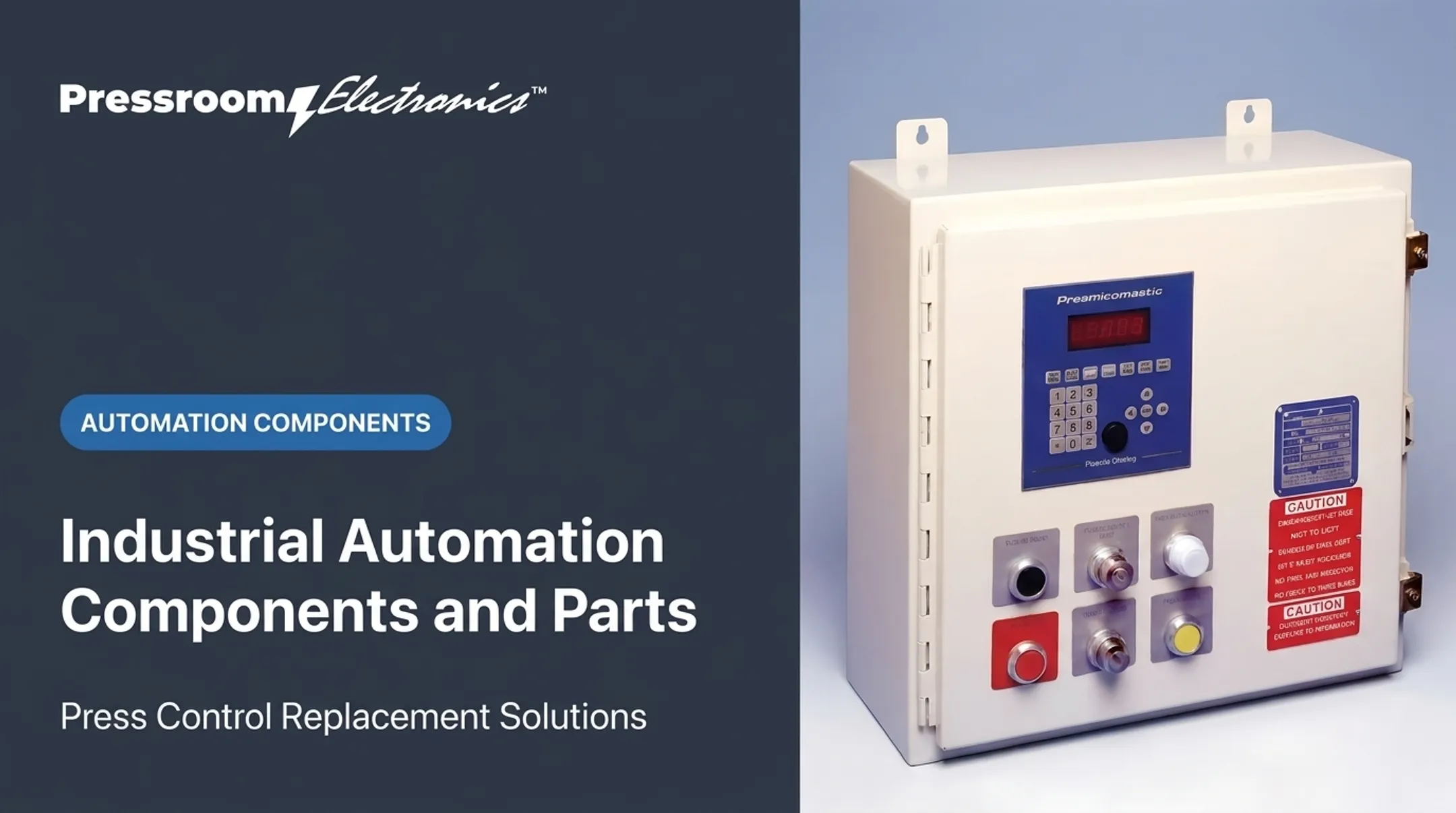
A complete machine or integrated system is automation equipment. Valves, cylinders, filters, fittings, sensors, and control modules are the individual products inside it. Pressroom Electronics' PCS-4000 package shows the difference. It bundles a monitored dual solenoid valve, a filter-regulator-lubricator, an operator station, a pressure switch, and a resolver transducer into one control system.
Pneumatic vs. Hydraulic vs. Electric
| Technology | Power medium | Positioning |
|---|---|---|
| Pneumatic | Compressed, elastic air | Standard end-to-end motion; intermediate stops need extra controls |
| Hydraulic | Liquid pressure | Suited to high-power work such as presses and lifting |
| Electric | Motors and mechanical drives | Programmable positioning with high stiffness |
Air compresses like a spring, which limits unregulated positioning. Festo's actuator comparison notes that servo-pneumatics, which combine sensors and proportional valves, can add regulated positioning and force control.
Pneumatic Automation Equipment and Products: Core Components
Air Generation, Storage, and Distribution
Compressors supply the air. Receiver tanks store it and buffer short demand spikes. Plant piping, isolation valves, and machine-level connections carry it to the point of use.
Before choosing equipment, verify available pressure, flow, peak demand, and duty cycle. A machine that works at 7 a.m. may starve at noon when every line is running.
Air Preparation and Conditioning
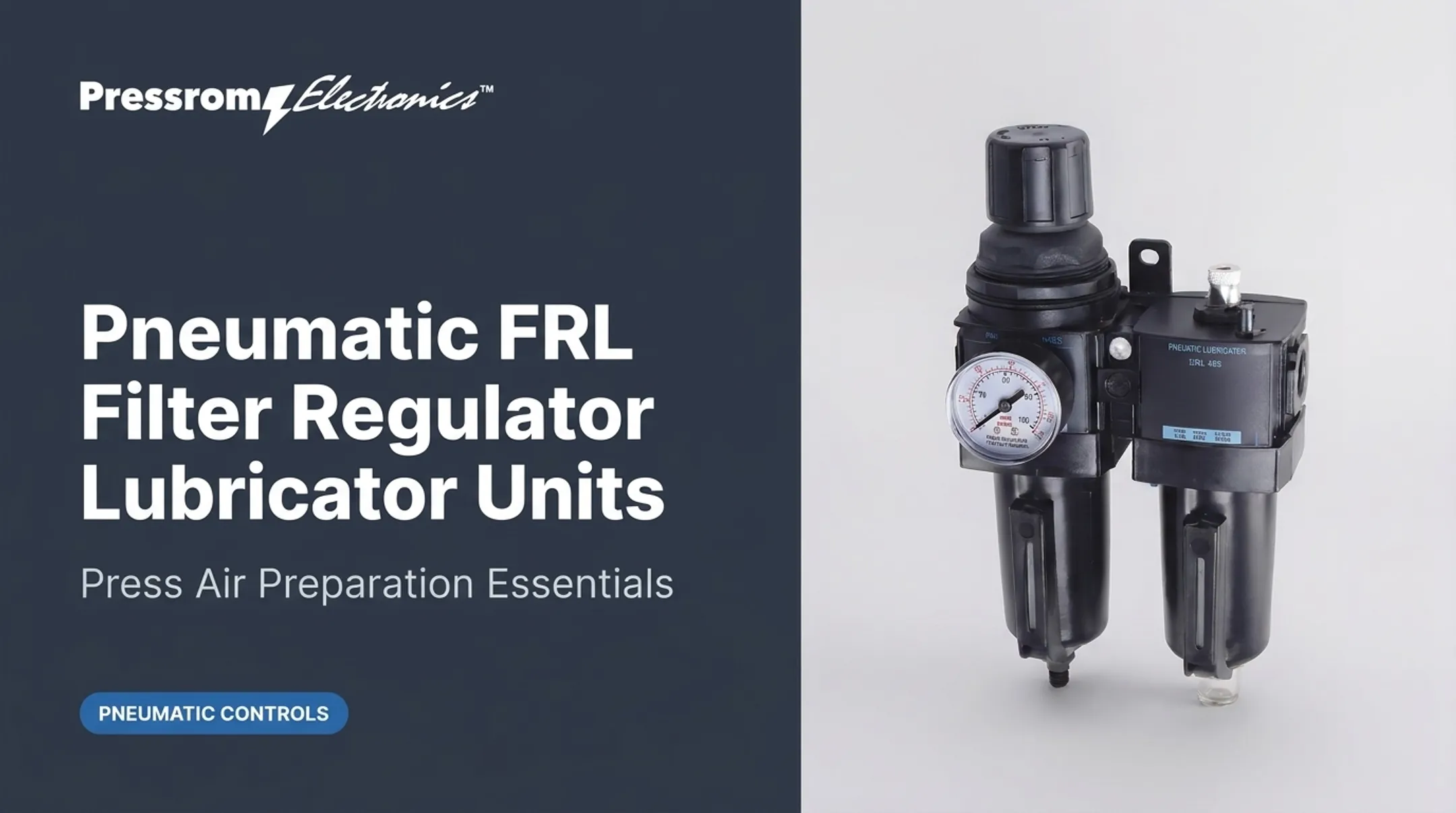
Filters remove particles and oil. Regulators hold application pressure. Dryers lower the pressure dew point. Gauges, drains, and shutoff or soft-start devices complete the stage.
Lubricators need a second look. Festo's white paper says modern valves and drives generally need no added lubrication, and added oil can wash out factory grease. Check the manufacturer's requirement first.
Contaminants, moisture, and pressure swings shorten seal and valve life, so this stage protects everything downstream.
Control Valves and Manifolds
Directional valves route supply and exhaust between actuator chambers. A 5/2 valve controls both chambers. Common options include:
- Solenoid valves for PLC operation
- Proportional valves for regulated positioning
- Flow controls to set speed
Manifolds combine valve functions on one platform.
Match valve capacity to system flow. An undersized valve slows the actuator no matter how large the cylinder is.
Actuators and End-Effectors
- Cylinders: push or pull
- Rotary actuators: rotate or index
- Grippers: clamp and hold parts
- Vacuum devices: pick and hold parts (ejectors use the Venturi principle)
- Air motors and nozzles: spin tools, blow off, or eject parts
Tubing, Fittings, Sensors, and Exhaust Products
Tubing, hoses, and fittings carry the air. Poor connections leak and restrict flow. Pressure switches, position sensors, and flow sensors confirm that motion completed. Silencers reduce exhaust noise, though excess oil can clog them.
Types of Pneumatic Automation Equipment and Products
Air Supply and Treatment Products
Compressors, receivers, dryers, filters, regulators, lubricators, gauges, and drains supply usable air. On specification sheets, check the operating pressure range, flow rating, port size, and required air quality.
ISO 8573-1:2010 classifies purity by particles, water, and oil. Festo's standard-pneumatics example is 7:4:4, which is not a universal requirement. Your component maker specifies the class.
Pressroom Electronics offers Filter Regulator Lubricator Model 311 (3/4") and Model 311A (1/2"), adjustable from 1 to 115 PSI.
Valves, Manifolds, and Control Products
This group covers on/off directional valves, flow controls, pressure controls, proportional valves, and manifold assemblies. Verify:
- Port size
- Actuation method and coil voltage
- Pressure range and flow capacity
- Response time
- Compatibility with your controller
For air-clutch presses, dual safety valves use two 3/2 normally closed elements in one body. Pressroom Electronics' minimum guidance is Size 4 for 0-90 tons, Size 8 for 100-200 tons, and Size 12 for 200-500 tons. Larger machines need factory consultation.
Cylinders, Rotary Actuators, Grippers, and Vacuum Products
Key selection factors include:
- Bore, stroke, and mounting style
- Extension and retraction behavior
- Load orientation, force, and speed
- Cycle rate and gripping method
- Available feedback For example, Model 304 is a 1 1/2" bore, 1" stroke air cylinder with a bracket and clevis.
Tubing, Hoses, and Fittings
Match material, inner diameter, pressure rating, temperature, chemical exposure, bend radius, and routing to the application. Leaks and restrictive connections cut performance even when the main components are sized correctly.
Sensors, Monitoring, and Supporting Equipment
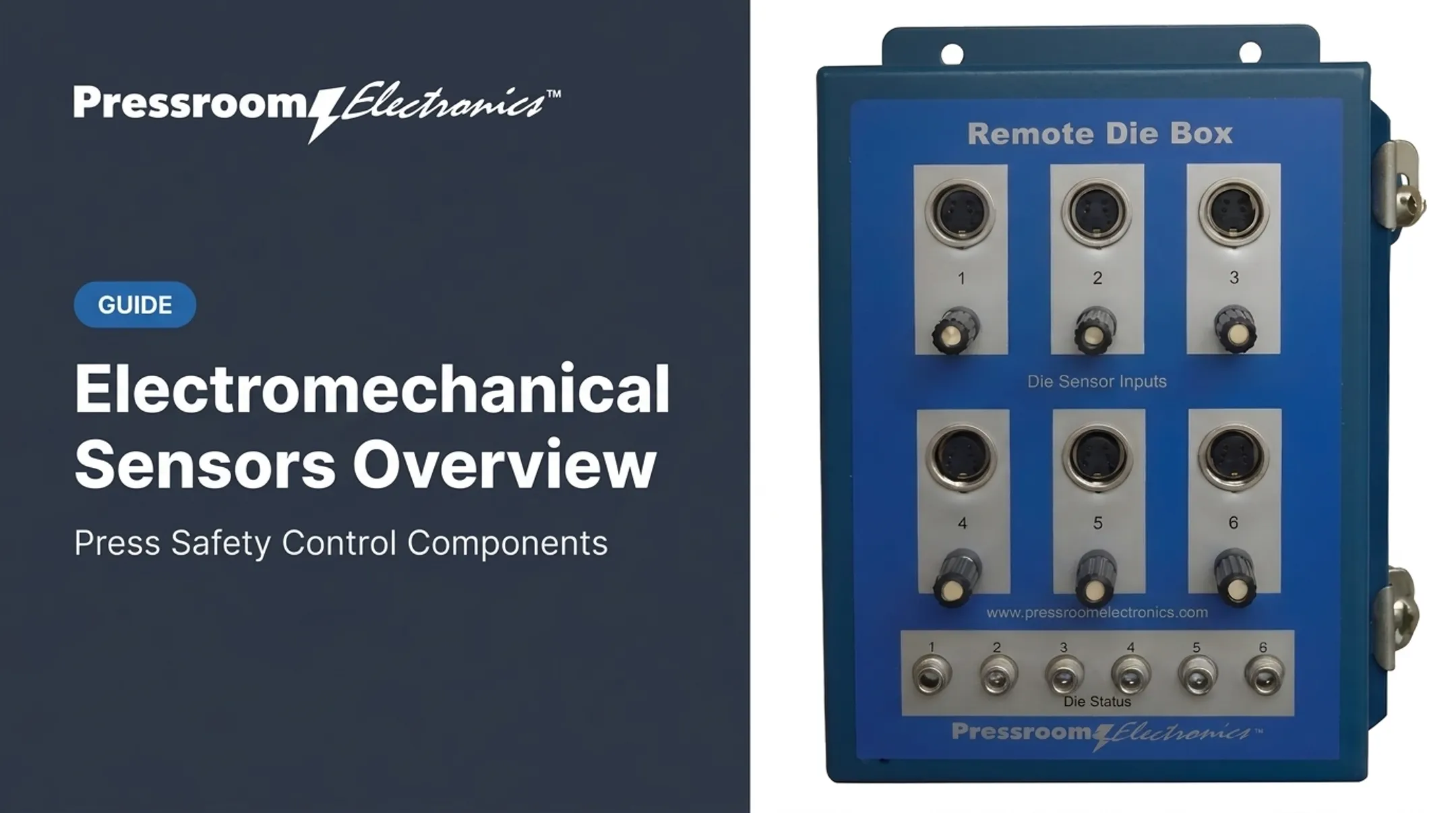
Supporting gear includes position sensors, pressure switches, flow and air-consumption monitors, silencers, and safety shutoff devices. They aid fault detection, sequence verification, and maintenance planning, and many connect to PLCs or networks. Model 306 is a heavy-duty NEMA 12 pressure switch, adjustable from 1 to 115 PSI.
Where Is Pneumatic Automation Used?
Manufacturing and Assembly
Typical tasks include:
- Part positioning, clamping, and pressing
- Sorting and pick-and-place
- Machine loading and repetitive material movement
Plants choose pneumatics when speed, repeatability, simple control, and robust operation matter most. Festo's HPPH gripper, for instance, targets automotive subassembly and semiconductor handling.
Food, Material Handling, and Lifting
- Food processing: SMC offers stainless cylinders for washdown machinery.
- Material handling: NSM Magnettechnik uses Festo cylinders to push sheet-metal blanks onto stacks; Festo reports better reliability and less maintenance.
- Lifting: Schmalz vacuum lifters can use an ejector, with a lift tube that contracts to raise a load.
Check product specs with each manufacturer before you specify a component.
Limitations to Weigh
Pneumatic motion is not free. The Compressed Air Challenge says a typical poorly maintained plant likely leaks about 20% of its compressed air, while a well-maintained system should lose less than 10%. Those are guidance benchmarks, not measurements of your plant.

Before you commit, also weigh:
- Noise and moisture in the air supply
- Pressure variation and air compressibility
- Maintenance load and precision requirements
How to Select and Integrate Pneumatic Automation Equipment
Define the Application First
Document mechanical requirements first:
- Load, force, stroke, and direction
- Cycle time, speed, and duty cycle
- Positioning tolerance and workpiece traits
- Available space
Then capture environmental conditions: temperature, dust, moisture, washdown, chemicals, vibration, and hazards. These drive material, sealing, and enclosure choices.
Size the Air Supply and Motion Components
Match compressor capacity, receiver storage, piping, valve flow, cylinder bore, stroke, and actuator type to actual demand. Avoid both undersizing and needless oversizing.
Use engineering calculations or manufacturer tools instead of rules of thumb. Theoretical cylinder force equals piston area times supplied pressure, less spring force on single-acting designs.
Parker sizes valve Cv from flowing pressure, bore, and desired rod speed. Festo's sizing tool uses moved mass, movement time, and operating pressure.
Account for:
- Pressure drop and tube length
- Fitting restrictions
- Exhaust flow
- Peak simultaneous demand
Each can change actuator speed and available force.
Plan Control, Feedback, and Integration
Sensors, solenoid valves, PLCs, HMIs, safety circuits, and networks coordinate motion and confirm it happened. Connected manifolds add diagnostics. IO-Link, standardized under IEC 61131-9, provides point-to-point communication with parameterization and diagnostics.
Add IIoT features only when the data supports a defined goal, such as spotting a failing filter before it stops a line.
Build in Safety and Maintainability
Design in these safeguards:
- Pressure relief and emergency shutoff
- Controlled exhaust, isolation, and lockout/tagout
- Guarding and safe access
OSHA's 1910.147 explicitly includes pneumatic energy: residual energy must be relieved or restrained, and isolation verified. Confirm applicable OSHA, ANSI, manufacturer, and site rules.
Routine maintenance:
- Check for leaks; ultrasonic detection works well
- Inspect tubing and fittings
- Drain moisture and replace filters
- Verify regulator settings
- Test sensors
- Review abnormal pressure or cycle data
Metal Stamping and Pressroom Automation
Pressroom Electronics provides pressroom electronic controls and automation, including press controls, brake monitoring, die protection, guarding, and production monitoring. These can complement pneumatic auxiliary equipment around mechanical punch presses, such as air feeds and part ejection. It does not supply compressors or general pneumatic products. For application details, contact the company's pressroom controls team.

Frequently Asked Questions
What is pneumatic automation?
It uses compressed air, valves, actuators, sensors, and controllers to perform repeatable mechanical tasks. A cylinder that pushes parts onto a stack on a PLC signal is a simple example.
What is considered automation equipment?
Complete automated machines and integrated systems count as automation equipment. Individual items such as controllers, sensors, valves, actuators, air-preparation devices, and safety components are the products inside them.
What are the main components of a pneumatic automation system?
An air source, receiver, air preparation, valves, actuators, tubing and fittings, sensors, a controller, and safety devices.
How do you choose pneumatic automation equipment?
Start with force, stroke, speed, and duty cycle. Then check pressure, flow, air quality, environment, control compatibility, safety, and maintenance needs.
What are the advantages and limitations of pneumatic automation?
It offers fast, repeatable motion and simple, robust components. Limits include air consumption, leaks, noise, compressibility, maintenance, and modest precision.
How does pneumatic automation differ from hydraulic or electric automation?
Pneumatics uses compressed gas, hydraulics uses pressurized liquid, and electric systems use motors. The best fit depends on force, speed, precision, environment, control, and lifecycle cost.