Introduction
In OSHA's preliminary fiscal year 2026 list of most-cited standards, OSHA's top 10 list places lockout/tagout at No. 3 and machine guarding at No. 10. Both failures show up around presses every year.
The consequences are concrete. At D&D Manufacturing in El Paso, a worker lost two fingers in a 500-ton hydraulic press. OSHA proposed $412,750 in facility-wide penalties for guarding, inspection and PPE deficiencies.
Add lost work time, damaged dies, unplanned downtime and investigations, and one bypassed safeguard gets expensive fast.
Air or oil, a press hurts people when guarding, controls, stored-energy isolation or procedures are skipped. This article covers the layers that prevent that.
Key Takeaways
- Select safeguards through a documented, machine-specific risk assessment.
- Isolate and verify air, fluid, electrical, gravity and mechanical energy separately before servicing.
- Inspect guards, controls, hoses, valves and ram restraints before operation and after any change.
- Never bypass a device, lean on an E-stop as a guard, or treat pressure loss as zero energy.
Safety Guidelines for Pneumatic and Hydraulic Presses
Safe operation follows the hierarchy of controls: eliminate access where possible, add engineered safeguards, apply procedures and training, and use PPE last. PPE is the final layer, never the primary safeguard.
Hazards to Plan For
- Point-of-operation crushing and amputation
- Unexpected cycling
- Stored pneumatic pressure
- Hydraulic injection and hose rupture
- Ram drift or fall
- Electrical hazards, flying fragments and sharp stock
- Noise and ergonomic strain
Air versus fluid matters less than how design, tooling, controls, maintenance and operator behavior interact.
Which Rules Apply
Verify current applicability with your safety professional. OSHA 1910.212 covers general machine guarding. OSHA 1910.217 expressly excludes hydraulic and pneumatic power presses, so don't apply its mechanical-press rules wholesale. Hazardous energy during servicing falls under 1910.147.
ANSI B11.2-2013 (R2020) is the dedicated standard for hydraulic and pneumatic presses, used with B11.0 and B11.19. Manufacturer instructions still govern. The right safeguard depends on press type, access pattern, stroke, speed, tooling and risk assessment.
General Safety Precautions
PPE From the Hazard Assessment
OSHA 1910.132 requires a hazard assessment, and the job drives the selection:
- Eye and face protection for fragments and fluid spray
- Hearing protection (OSHA's action level is 85 dBA over an 8-hour average)
- Safety footwear
- Task-appropriate gloves
Gloves can entangle near moving tooling or rotating parts. Choose them per task, not by habit.
Work Area
- Clear space around the press
- Good lighting
- Unobstructed access to controls and E-stops
- Controlled pedestrian access
- Stable, dry flooring
- Organized storage for dies, stock, hoses and tools
Pre-Shift Checklist
Check before the first stroke:
- Guards, interlocks, light curtains and two-hand controls
- Emergency stops
- Pressure indicators, hoses, fittings and leaks
- Tooling security and die alignment
- Abnormal noise or signs of tampering
If anything fails, stop and report. Don't run it to finish the order.
Safety During Installation
Site Preparation
Problems start before the first stroke:
- Inadequate foundation or anchoring (1910.212 requires fixed machines be anchored against walking)
- Insufficient clearance or poor maintenance access
- Unsuitable electrical service
- Wrongly sized air or hydraulic connections
- Incomplete guarding at the die
Rigging and Positioning
Use qualified riggers and rated lifting equipment for the press, die, cylinders, manifolds, power units and control cabinets. Anchor securely, protect hoses and cables, provide pressure relief, and match connections to manufacturer specifications.
Lockout Before Work
Lock out electrical, pneumatic, hydraulic, gravity and mechanical energy before installation, adjustment or wiring. Bleed, block or dissipate stored energy, then verify zero energy before anyone starts.

When to Stop
Halt commissioning if:
- Manuals are missing
- Components are damaged or incorrectly rated
- Guarding is incomplete
- Safety circuits haven't been validated
- Nobody can show how stored energy is released and restrained
Safety While Using or Operating
Start-Up
Before enabling the press, an authorized operator should:
- Complete the inspection
- Confirm the area is clear
- Verify the die and tooling setup
- Test safety functions per procedure
- Confirm nobody is in the hazard zone
What Each Safeguard Does
Fixed guards, interlocked gates, light curtains and presence-sensing devices keep people out of the point of operation. Know each device's limits:
- Hold-to-run two-hand controls require constant actuation, and releasing either control stops the hazardous motion.
- Two-hand trips only initiate the cycle. OSHA's machine guarding eTool notes hands are then free, so an operator could enter during a dwell or later in the cycle.
- Anti-repeat controls stop tie-down and repeat strokes.
- Light curtains must be placed far enough away for the press to stop before a hand reaches the hazard.
Operating Limits
Stay within rated force, pressure, stroke, speed, duty cycle, material and tooling limits. Never:
- Reach into the die area
- Hand-feed unsafely
- Clear jams while energized
- Use improvised tools or spacers
Stop Immediately If You See
- Unexpected cycling or failure to return
- Pressure loss or ram drift
- Unusual vibration or noise
- Hydraulic leaks or damaged tubing
- Inconsistent stopping or control faults
- Overheating or repeated misfeeds
When any of these appear, stop, isolate, and call a qualified inspector.
Retrofit and Modernization
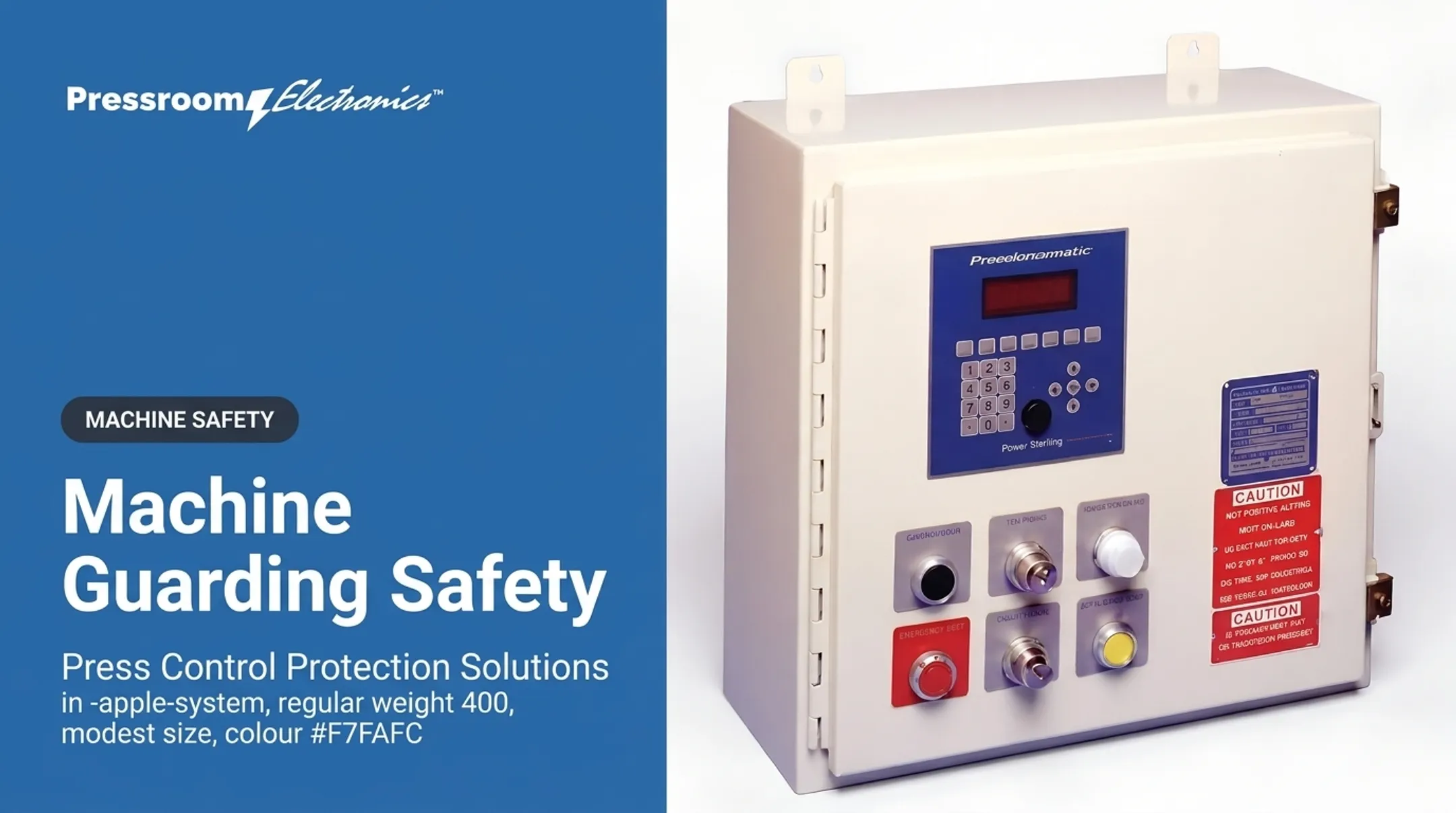
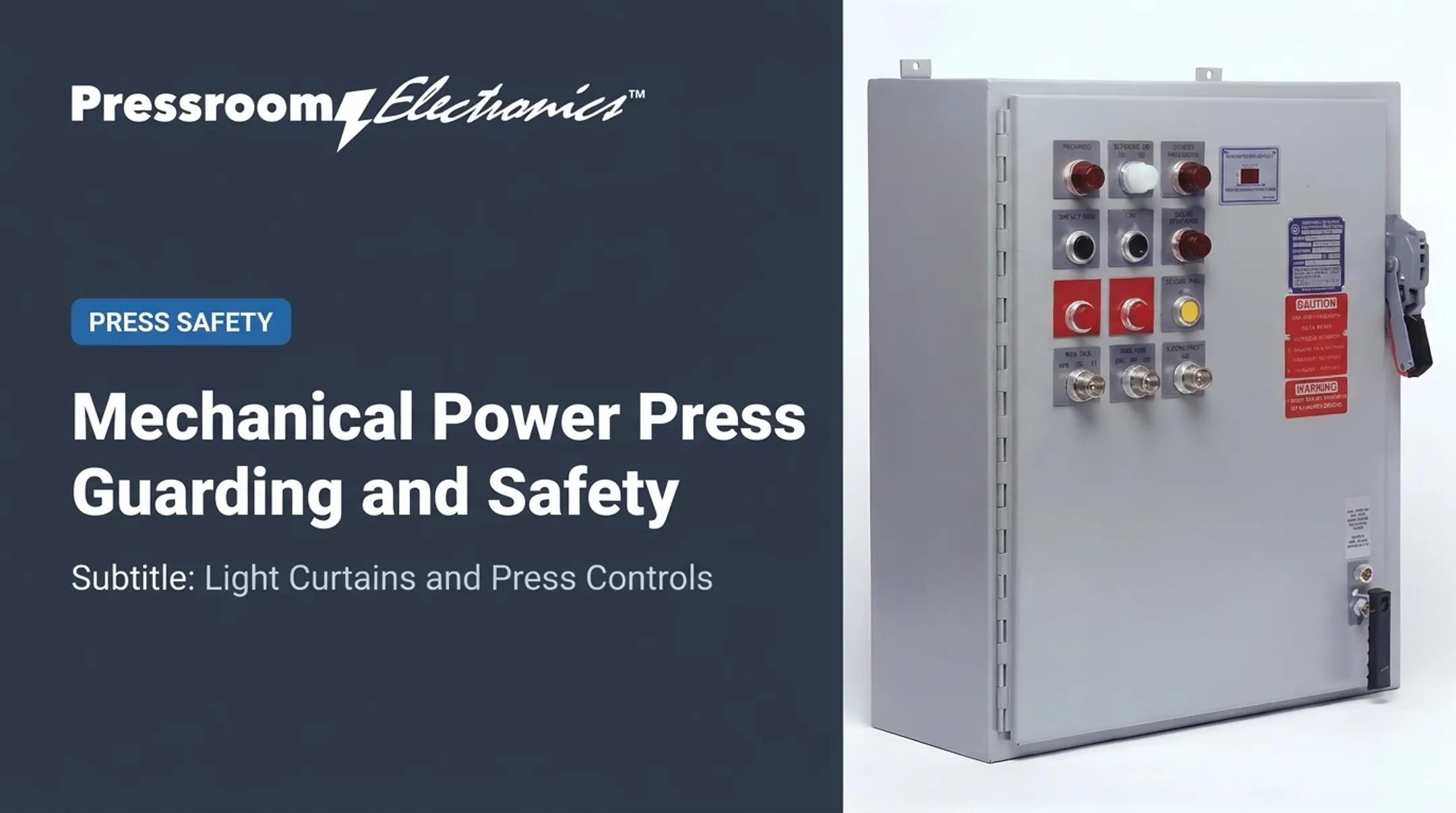
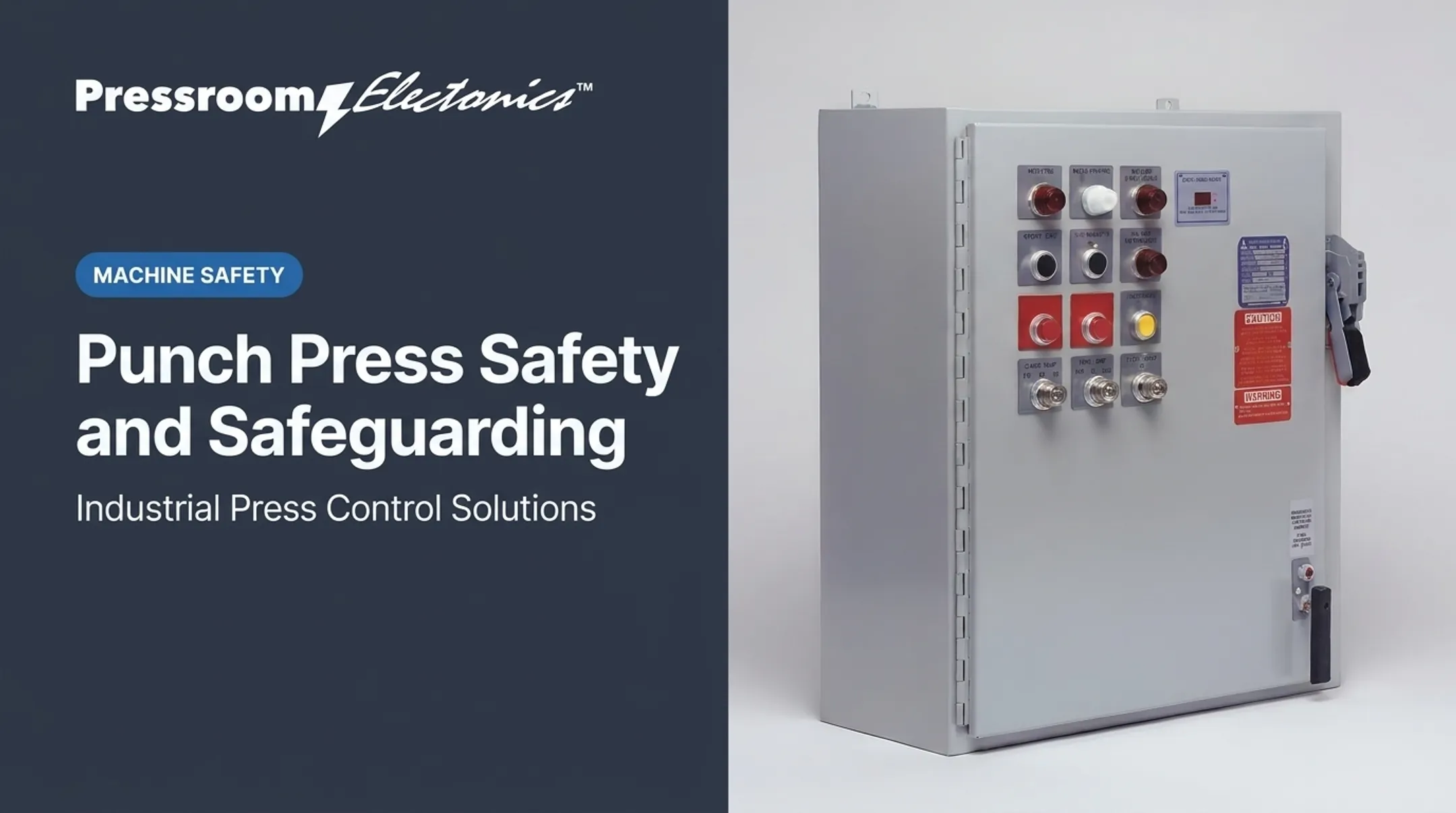
Older presses often need better controls rather than replacement. Pressroom Electronics designs press controls, brake monitoring, die protection, guarding and production monitoring for stamping plants, including its Model FPC for hydraulic and pneumatic machines. The FPC monitors faults, returns the machine to a safe position on pressure loss, and requires operator-actuated resets.

Compatibility, installation, validation and compliance still need confirmation by qualified professionals.
Environmental and System Safety Considerations
Pneumatic Hazards
- Residual compressed air and trapped pressure
- Unexpected cylinder movement
- Whipping hoses and damaged fittings
Reduce those risks with rated components and hose restraints where appropriate, plus controlled exhaust or dump valves. Confirm pressure has fully dissipated before service.
Hydraulic Hazards
- High-pressure fluid injection and hose rupture
- Hot or contaminated fluid
- Leaks that create slips
- Pressure spikes and ram drift
Never search for leaks with your hands. Injection injuries can look minor, with a small puncture and little pain, yet cause severe internal damage. IFPS guidance calls for immediate emergency care.
Gravity and Mechanical Energy
Don't rely on pressure to hold a load. Where a platen or ram can fall or drift, use manufacturer-approved blocks, supports, catchers or rod locks. OSHA hydraulic die-setting guidance links many injuries to residual energy in a raised slide and to missing safety blocks.
Environment
Dust, moisture, vibration, heat, poor air quality and degraded fluid all reduce safeguard reliability. Contaminated hydraulic oil alone can cause extended downtime, and dust or condensation can throw off light-curtain optics.
Plan preventive maintenance, and retest after any change to the press, tooling, controls or surrounding cell.
Isolation Is Not Automatic
An E-stop, pressure switch or check valve is not automatically an energy-isolation device. OSHA notes check valves don't always reliably isolate energy, and push buttons and selector switches aren't isolators either.
Write a LOTO procedure that covers every energy source, isolation point, stored-energy hazard, verification step and restart process.
Common Safety Mistakes to Avoid
"It's a Small Press"
Low tonnage still means pinch points, stored pressure, sharp stock and unexpected movement. Modest-looking machines hurt people.
One Device as the Only Safeguard
E-stops, light curtains and two-hand controls each have a defined function and failure mode. Integrate them with guarding and monitored controls in a risk-appropriate safety circuit.

Shortcuts That Cause Injuries
- Skipping inspections or bypassing interlocks delays fault detection.
- Using damaged hoses or fittings risks rupture and injection.
- Ignoring leaks invites slips and pressure loss.
- Skipping mechanical ram restraints risks a falling load.
- Treating check valves as LOTO allows unexpected movement.
- Substituting inching for LOTO doesn't protect during other servicing.
- Using static blocks as powered-stroke restraints exceeds their intended function.
Conclusion
Press safety is layered: guarding, reliable controls, disciplined operation, preventive inspection and verified isolation of every energy form. No single layer carries the load.
Treat safety as part of every setup, production run, maintenance task, retrofit and commissioning, not a one-time installation job. When safeguards or machine conditions change, bring in qualified safety, engineering and service people.
Frequently Asked Questions
What safety guidelines apply when using pneumatic power tools?
Wear eye and hearing protection, secure hoses with positive-locking fittings, and disconnect air before servicing or changing accessories. Keep hands clear of moving parts and release air in a controlled way. Presses need more extensive safeguards than handheld tools.
What are pneumatics used for?
Pneumatic systems use compressed air to create controlled movement or force. Typical uses include pressing, clamping, forming, stamping, punching, riveting, and assembly.
What is the difference between hydraulic and pneumatic systems?
Hydraulics use pressurized liquid, usually oil, and deliver higher force from smaller actuators. Pneumatics use compressible air, which gives cushioning but needs larger actuators. Both store hazardous energy; hydraulics also add leak and injection risks.
What safety precautions should be taken when operating a hydraulic press?
Use point-of-operation guarding, rated tooling and pre-use inspections. Watch for leaks, use ram retention, train operators and rehearse emergency procedures. Lock out before maintenance or clearing jams.
How do you lock out and release stored energy in a pneumatic or hydraulic press?
Follow the machine-specific LOTO procedure. Isolate all electrical, pneumatic, hydraulic, gravity and mechanical sources, bleed stored pressure, and block moving members. Verify zero energy, and let only authorized personnel restart.